


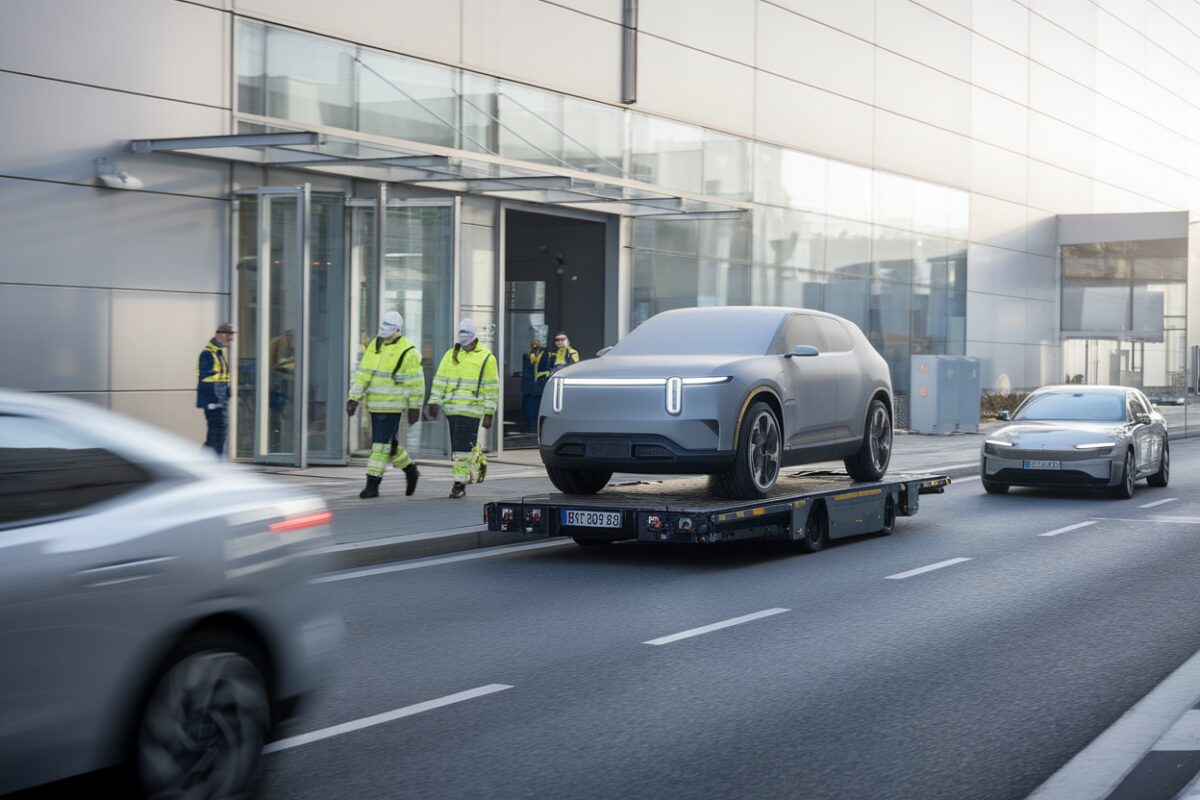
Stellantis is betting big on its French footprint, announcing roughly$1.1 billionin new investment to retool its Mulhouse factory and expand engineering work at its Belchamp test center as the race to build affordable electric cars intensifies.
The goal: get Mulhouse ready to assemble a “new generation” of zero-emission vehicles starting in2029, while Belchamp, one of the company’s key R&D hubs, takes on a larger role validating the EV platforms that will underpin future models. The move comes as European automakers face relentless price pressure from Chinese brands and their fast-improving EV lineups.
Stellantis, the multinational behind Jeep, Ram, Chrysler, Dodge, Fiat, Peugeot, and Citroën, framed the plan as part of a broader, multi-year industrial shift, not a quick factory makeover.
Mulhouse is being rebuilt for the EV era, without shutting down the plant
At Mulhouse, in eastern France near the borders of Germany and Switzerland, Stellantis is trying to pull off a tricky transition: converting a plant built around gas and hybrid vehicles into one capable of producing next-generation EVs.
The factory currently turns out models including the Peugeot 308 and 408 and the DS7 SUV, brands that are well-known in Europe but not widely sold in the U.S. Switching to EV production isn’t just swapping an engine for a battery. It means redesigning assembly steps, reworking internal logistics, and upgrading quality-control systems for high-voltage components.
Stellantis says the conversion will be phased in, with upgrades staged over time rather than a months-long shutdown. In auto manufacturing, that typically means running mixed production flows during the transition, new tooling here, reconfigured workstations there, and expensive new equipment like robotics cells and electrical test benches that can run into the millions of dollars apiece.
Mulhouse also carries political and economic weight. The site employs about4,000 workers, making it a major regional employer. Local officials welcomed the announcement as a long-awaited signal that Stellantis intends to keep the plant relevant as Europe accelerates toward electrification.
Still, modernizing a factory doesn’t guarantee it will run at full tilt. Europe’s EV market remains highly sensitive to sticker prices, government incentives, and the pace of charging buildout. If demand cools, even a newly upgraded plant can end up underused.
Belchamp’s job: prove the next EV platforms are ready for prime time
The other half of the investment targets Belchamp, an engineering and testing center in the Doubs region of eastern France. This is where Stellantis says it will strengthen development, calibration, and validation work tied to its future EV platforms.
That work is less about assembly lines and more about the hard, unglamorous grind that determines whether an EV succeeds: high-voltage system behavior, component durability, energy-management software, driver-assistance calibration, and reliability testing across varied conditions.
EVs are also software-heavy machines. Change a cooling strategy or charging curve, and engineers often have to re-test and re-validate. That requires specialized facilities, equipment, and teams, exactly what Stellantis says it’s expanding at Belchamp.
Keeping that engineering close to manufacturing can also speed up fixes and cut costs. But Belchamp’s role will depend on internal Stellantis decisions about which sites lead which projects, choices that can shift quickly as product plans and market conditions change.
A French investment inside a global electrification plan
Stellantis is positioning the Mulhouse and Belchamp spending as one piece of a much larger global electrification program worth “tens of billions” of euros, roughly “tens of billions” of dollars at today’s exchange rates.
The company, like its rivals, is leaning hard into shared EV platforms, common architectures that can underpin multiple models. The logic is simple: the more vehicles share the same bones, the easier it is to spread R&D and tooling costs across a wider lineup.
That cost math is becoming existential in Europe, where consumers comparison-shop down to the last euro, and where Chinese automakers have been gaining attention by offering feature-packed EVs at aggressive prices.
Even with major investment, Stellantis still faces the core challenge: selling enough EVs at prices buyers will accept. If prices stay high, adoption slows, and factory volume targets get harder to hit.
Local leaders cheer, but the fine print matters
Mulhouse-area officials praised the announcement as a durable industrial commitment, not a short-term headline. For local governments, a long runway matters: it shapes workforce training, supplier planning, and whether younger workers see a future in manufacturing.
They also tied the move to regional decarbonization goals, an argument familiar to American readers from debates in states competing for EV plants and battery factories.
But industry experts caution that a headline figure like$1.1 billiondoesn’t mean that entire amount goes into shiny new machines on the factory floor. These budgets typically include a mix of engineering, testing, tooling, and production reorganization, spending that’s critical, but less visible.
Affordable EVs, and a China partnership, underscore the price war
Stellantis knows the next phase of the EV fight is about affordability. The company has launched an “e-CAR” program aimed at developing a lower-cost small electric vehicle for Europe, with production targeted to start in2028at its Pomigliano d’Arco plant near Naples, Italy. Stellantis has indicated the gas-powered Fiat Panda would continue there at least through2030, a sign the transition will be gradual.
That timeline puts Mulhouse’s2029target in context: different plants, different roles, staggered bets. The internal competition is real, each site has to prove it deserves the next product assignment.
Then there’s the most telling detail: Stellantis is also working with Chinese EV makerLeapmotorto bring lower-cost electric vehicles to Europe. It’s a pragmatic move in a brutal price environment, but it raises an uncomfortable question for European, and American, manufacturing politics: how do you protect local jobs while leaning on overseas partners to cut costs and move faster?
For Mulhouse, the answer will come down to whether Stellantis can deliver EVs that are not only technologically competitive, but priced to move. The company is spending big to stay in the game. The market will decide whether that bet pays off.
Key Takeaways
- Stellantis is committing €1 billion between Mulhouse and Belchamp to accelerate electrification.
- Mulhouse must adapt its production lines to assemble new zero-emission models starting in 2029.
- Belchamp is strengthening its engineering, testing, and validation role for future electric platforms.
- The announcement is part of a global plan worth several tens of billions of euros, under intense competitive pressure.
- The group is also moving forward on more affordable electric vehicles, with e-CAR and the Leapmotor partnership.
Frequently Asked Questions
What does the €1 billion investment announced by Stellantis cover?
It covers a range of spending related to development and industrialization, including modernizing the production lines in Mulhouse and strengthening engineering and testing resources in Belchamp. In the auto industry, an amount like this typically includes various items such as equipment, tooling, technical validation, and industrial organization.
When is Mulhouse expected to start producing electric vehicles?
The stated goal is to enable, starting in 2029, the assembly of new zero-emission models at the Mulhouse site through a gradual adaptation of the production lines.
What is Belchamp’s role in Stellantis’ EV strategy?
Belchamp, an engineering site in the Doubs region, is set to play a stronger role in developing and testing the group’s future electric platforms. This includes engineering work, validation, and the testing required before industrialization.
Which models are currently produced at Stellantis’ Mulhouse plant?
The Mulhouse site currently produces internal-combustion and hybrid models, including the Peugeot 308 and 408, as well as the DS 7 SUV, according to information shared about the plant’s current output.
Why is Stellantis emphasizing more affordable electric cars in Europe?
Europe’s EV market remains heavily focused on price and affordability. Stellantis launched the e-CAR project aimed at a low-cost small EV and is continuing its cooperation with Leapmotor to offer lower-cost electric vehicles amid intensifying competition.
Sources
- Stellantis va investir 1 milliard d’euros à Mulhouse et Belchamp pour produire une « nouvelle génération de véhicules électriques »
- Mulhouse. Stellantis va investir un milliard d'euros pour produire des véhicules électriques
- Stellantis investit plus d’un milliard d’euros pour transformer son site de Mulhouse vers l’électrique
- Gamme de véhicules électriques | Parc Stellantis Canada
- Stellantis lance le projet e-CAR : une nouvelle petite voiture électrique abordable pour l'Europe

- Eurostar lance son application ChatGPT pour préparer ses voyages en Europe - août 18, 2026
- Tanguy Matériaux optimise la gestion de sa flotte et réduit sa consommation de carburant grâce à la télématique Webfleet et l’accompagnement de Katalii - juillet 15, 2026
- Défilé du 14 juillet 2026, cérémonie militaire à Paris, forte exposition médiatique, ce que l’État donne à voir - juillet 14, 2026
