


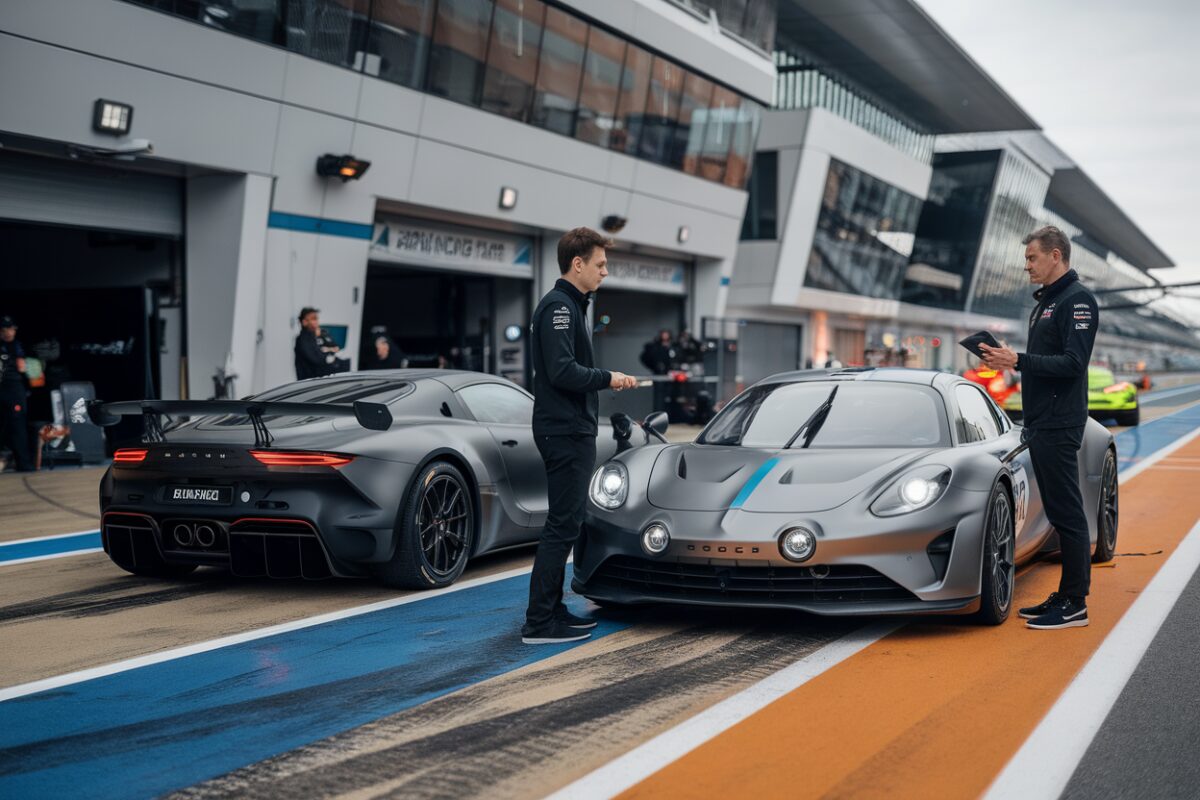
Alpine is walking into the deep end at the 2026 24 Hours of Le Mans with two hybrid Hypercars, and almost no margin for error.
The French brand’s Alpine A424 prototypes are back on the grid in the race’s top class, where the field now looks less like a showdown and more like a traffic jam of factory powerhouses. Over 24 hours, Le Mans doesn’t just reward speed. It punishes the smallest mistakes: a slow pit stop, a badly timed caution, a tire issue at the wrong moment, and the leaderboard flips.
Last year, Alpine finished ninth and 10th overall, respectable, clean runs that proved the program is real, but not the kind of result that changes a season. Now the target is bigger: fight for the top three and turn steady progress in the World Endurance Championship into a breakthrough on the sport’s most unforgiving stage.
Eight manufacturers, one brutal reality: every tenth matters
Le Mans’ Hypercar class has become a full-on manufacturer brawl. The 2026 lineup includes Aston Martin, Alpine, BMW, Cadillac, Ferrari, Genesis, Peugeot, and Toyota, eight brands with the budgets, engineering muscle, and driver lineups to win.
For American readers, think of it like the Daytona 500 suddenly adding a half-dozen more top-tier factory teams overnight. When the field is this stacked, losing a tenth of a second on track can mean losing a position. And a small strategic mistake can cost far more than it would in a thinner grid.
That’s why endurance teams talk less about chasing lap time and more about hunting problems before they find you, avoiding penalties, keeping the car out of trouble in traffic, and executing pit stops with machine-like consistency through the night.
Le Mans also isn’t a standalone spectacle anymore. It’s the third round of an eight-race World Endurance Championship season, meaning teams arrive with fresh data from earlier races, tire behavior, fuel consumption, and pit procedures already stress-tested. That changes preparation, and it raises expectations.
The Alpine A424: a hybrid prototype built for the long haul
The Alpine A424 is a hybrid Hypercar powered by a 3.4-liter V6 built by Mecachrome. In American terms, that’s roughly a 0.9-gallon engine displacement, small by NASCAR standards, but purpose-built for efficiency, durability, and sustained speed over a full day of racing.
That hybrid architecture brings its own discipline. Over 24 hours, teams have to manage energy deployment, protect tires, and keep temperatures under control as the track cools overnight. Modern endurance racing is as much about software, electronics, and repeatable pit execution as it is about raw mechanical toughness.
Alpine does have history here: the brand won Le Mans overall in 1979. But that was a different era. Today, winning is less about heroic improvisation and more about never giving away free time, especially when the competition is this deep.
Two cars, three drivers each, and no room for unforced errors
Alpine is splitting its effort across two entries, with the standard endurance setup of three drivers per car. The No. 35 features Ferdinand Habsburg, Paul-Loup Chatin, and Charles Milesi. The No. 36 pairs Nicolas Lapierre and Matthieu Vaxiviere with Mick Schumacher.
Le Mans changes character hour by hour. Daytime is about managing speed and density. Night is about visibility, shifting temperatures, and traffic that gets trickier as fatigue sets in. A couple of sloppy pit entries after midnight can quietly cost a minute, an eternity in a race where the top class can run nose-to-tail for long stretches.
The strongest lineups aren’t just fast; they’re consistent. That means clean radio communication, staying inside track limits, and navigating slower-class traffic without forcing the issue. With two cars in the same garage, Alpine also has to avoid overreacting if one entry looks stronger early, sometimes the smartest move is sticking to the plan and letting the race come to you.
Early practice: BMW and Cadillac flash speed, Alpine stays in the mix
The first real signals of race week suggested Alpine won’t have it easy. In a practice session interrupted by a red flag, BMW posted a 3:23.302 lap, with an Alpine close behind at 3:23.725, about four-tenths of a second back.
That gap is small, but it’s telling. In a field this tight, “close” can still mean you’re constantly fighting to pass, constantly burning tires and energy to recover after a pit cycle.
The session also showed how quickly plans can get scrambled at Le Mans. A crash involving an Oreca prototype triggered the red flag, forcing teams to adjust run plans, fuel loads, and tire prep on the fly. Those disruptions are a preview of race day, when cautions and slow zones can rewrite strategy in minutes.
Cadillac also looked sharp early before BMW took over the top spot. Practice times don’t predict the final order, teams run different fuel loads and different programs, but they do reveal who has underlying pace, and who may have to work harder just to stay in touch.
From ninth and 10th to the podium: Alpine’s real challenge is the details
Alpine’s 2025 results provide a clear baseline. The No. 35 finished ninth overall after 385 laps; the No. 36 finished 10th with 384 laps. The average speed was about 217 km/h, roughly 135 mph, evidence of a steady, mistake-limited race.
But Le Mans is ruthless about small losses. In 2025, the No. 35 logged 33 pit stops totaling about 44 minutes; the No. 36 made 34 stops totaling about 46 minutes. Two minutes over 24 hours doesn’t sound like much, until you realize it can equal multiple positions when eight manufacturers are packed together.
That’s the assignment for 2026: turn “clean” into “meaningful.” A podium would reshape how the program is viewed, boost momentum in the WEC standings, and validate Alpine as a true top-class threat. But pushing too hard, an aggressive tire call, an early undercut, a risky restart in heavy GT traffic, can end the day fast.
The most realistic path looks simple on paper and brutal in execution: stay on the lead lap as long as possible, avoid penalties, nail every pit sequence, and be ready when the race inevitably knocks out a few favorites.
Key Takeaways
- Le Mans 2026 brings together eight Hypercar manufacturers, which leaves less room for error.
- Alpine is entering two A424 hybrid cars with a 3.4-liter V6 and is aiming to move up the order.
- Testing showed tight gaps, with BMW at 3:23.302 and an Alpine at 3:23.725.
- In 2025, Alpine finished 9th and 10th, with differences in pit stops and time in the pits that matter.
- Over 24 hours, performance depends as much on procedures and traffic as on outright speed.
Frequently Asked Questions
When are the 2026 24 Hours of Le Mans?
Race week is scheduled for June 10–14, 2026, with the event included on the WEC calendar.
How many Alpine cars are entered in Hypercar at Le Mans 2026?
Two Alpine A424s are entered in the Hypercar class as part of the Alpine Elf Endurance Team program.
What result did Alpine achieve at the 2025 24 Hours of Le Mans?
In 2025, one Alpine A424 finished 9th and the other 10th overall, which is a solid but improvable baseline.
Why aren’t free practice sessions enough to predict the race?
Not all teams run the same fuel loads or have the same objectives—some go for a fast lap, others validate long stints. Cautions and traffic can also shake up the order.
Sources

- 24 Heures du Mans 2026 : Toyota résiste en tête, Cadillac et BMW mettent la pression, découvrez l’épreuve décisive pour Ferrari avant l’arrivée - juin 14, 2026
- 24 Heures du Mans 2026 LMP2 – Doriane Pin et Duqueine visent l’exploit historique inattendu - juin 14, 2026
- Cadillac face à BMW aux 24 Heures du Mans : duel serré en tête après 15 heures - juin 14, 2026
