


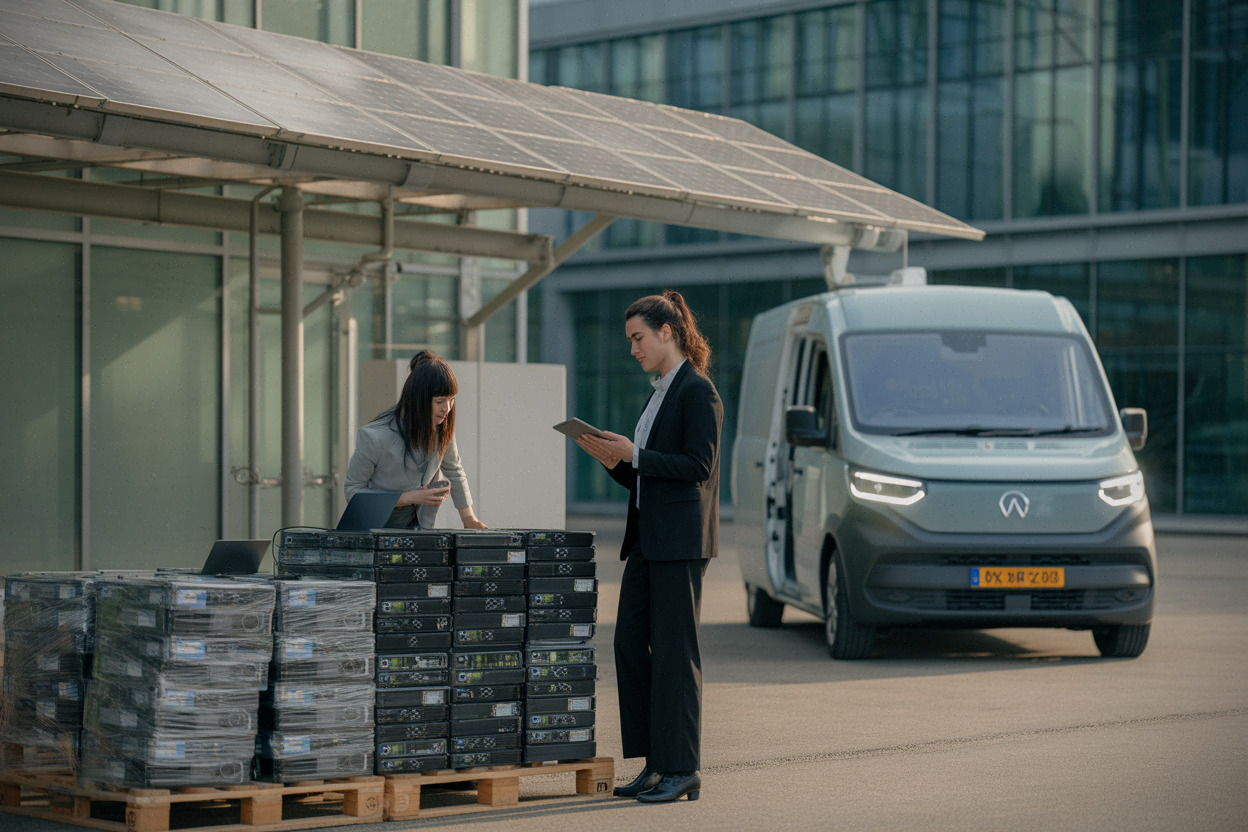
Lenovo says it now runs on 90% renewable electricity across its operations, and has recycled about 800 million pounds of materials and equipment, two headline numbers the PC and server giant is using to prove it’s getting greener in an industry under fire for energy use and electronic waste.
The figures, highlighted by French tech site Pause Hardware, land as corporate and government buyers tighten sustainability requirements for big tech purchases. For Lenovo, the message is clear: it wants to be seen as a safer bet for organizations trying to cut emissions and keep old hardware out of landfills.
Lenovo’s “90% renewable electricity” claim comes with fine print
Lenovo’s 90% renewable-electricity figure is the most straightforward metric in its sustainability messaging. For a company that sells everything from laptops and workstations to data-center servers, the power used by factories, offices, and logistics hubs is a major slice of its direct operational footprint.
But the number doesn’t mean Lenovo’s business is close to carbon-free. In electronics, much of the environmental impact sits upstream, in mining and processing raw materials, manufacturing components, and shipping parts and finished products around the world.
Moving operations to renewable power still matters because it targets the emissions Lenovo can control most directly: its own facilities and energy contracts. It also plays well with large customers, think government agencies, banks, manufacturers, and health systems, that increasingly bake environmental criteria into bids for thousands of PCs or major data-center deployments.
How companies count “renewable electricity” can vary widely. Some buy green power directly, some sign long-term power purchase agreements, and others rely on renewable energy certificates. The credibility often comes down to transparency: where the power is sourced, what accounting method is used, and how much is tied to production sites versus office operations.
About 800 million pounds recycled signals scale, but not the whole story
Lenovo’s second big number, 363 million kilograms recycled, roughly 800 million pounds, targets the industry’s most visible headache: e-waste. PCs, monitors, docks, servers, and accessories contain metals, plastics, and circuit boards that require specialized recycling systems to recover safely and economically.
The pressure is growing because businesses refresh hardware fast. Many corporate PC fleets turn over every three to five years, sometimes sooner for high-demand roles. Multiply that by school districts, public agencies, and large employers, and end-of-life management becomes as strategic as the upfront purchase price.
Recycling, though, isn’t a magic fix. Sorting, disassembly, and processing consume energy, and some materials remain difficult to recover at scale, composite plastics, batteries, and certain motherboard components often require separate processes and can be costly to handle.
That’s why the recycled-volume figure is useful as a yardstick, but incomplete without more detail, especially how much recovered material is actually reused in new products, and which product categories are included in the total.
Why the whole hardware industry is racing to publish numbers
Pause Hardware framed Lenovo’s claims in a broader shift: hardware makers are now expected to publish measurable environmental results, not just goals. Laptops and servers power modern digital life, but they also drive electricity demand and generate waste when devices age out.
The industry is squeezed from both sides. Customers want powerful machines delivered quickly at competitive prices. Regulators, investors, and public-sector buyers want proof on emissions, repairability, and sourcing, often in standardized formats, backed by audits or third-party assessments.
Lenovo’s rivals in business PCs and infrastructure are making similar claims about recycled materials, reduced packaging, and carbon-neutral targets. In that environment, a couple of big numbers won’t settle the debate. Buyers increasingly want comparable metrics, clear boundaries (what’s included and what isn’t), and progress that extends beyond corporate offices into suppliers, factories, shipping, and recycling partners.
Enterprise buyers want receipts, not slogans
For corporate IT departments and procurement teams, Lenovo’s figures have practical implications. Many large organizations now track “indirect” emissions tied to what they buy, and they need documentation to justify vendor choices to executives, employees, shareholders, and, sometimes, government overseers.
That means sustainability reviews are getting granular: device power draw, support lifetimes, repair options, trade-in and take-back programs, parts availability, and the percentage of recycled content by product line. A single recycled-volume total can’t replace product-by-product scrutiny, because a sales laptop, a graphics workstation, and a data-center server don’t carry the same footprint.
Lenovo’s 90% renewable-electricity claim could help in competitive bids, especially where buyers demand documented reductions in the “digital footprint” of their operations. The next test will be whether Lenovo, and its peers, can provide the deeper, more comparable proof that procurement teams now treat as table stakes.


Key Takeaways
- Lenovo reports that 90% of the electricity used in its operations is renewable.
- The group claims 363 million kg of recycled materials.
- E-waste remains a major challenge for the IT sector.
- Business customers are asking for detailed environmental proof.
Frequently Asked Questions
What does Lenovo’s 90% renewable electricity figure mean?
It indicates that Lenovo matches a very large share of its operational electricity with renewable sources. The exact scope depends on the sites, energy contracts, and the mechanisms used to account for that electricity.
Do the 363 million kg recycled apply only to Lenovo computers?
The figure refers to an overall volume of materials or equipment processed through the recycling programs cited by Lenovo. To assess the real impact, you need to know the share that was reused, which product categories are included, and the treatment/recycling pathways used.
Why do these metrics matter to business customers?
Large organizations increasingly factor environmental impact into their IT purchasing decisions. They look at energy use, recycled materials, repairability, take-back programs, and the documentation provided by manufacturers.

- Les trajets domicile-travail, repenser les accessoires du quotidien - septembre 9, 2026
- Chauffeur privé de prestige : la mise à disposition pour dirigeants et VIP à Bordeaux - septembre 7, 2026
- L’application Leocare est-elle la plus téléchargée dans l’assurance en France ? - août 25, 2026
