


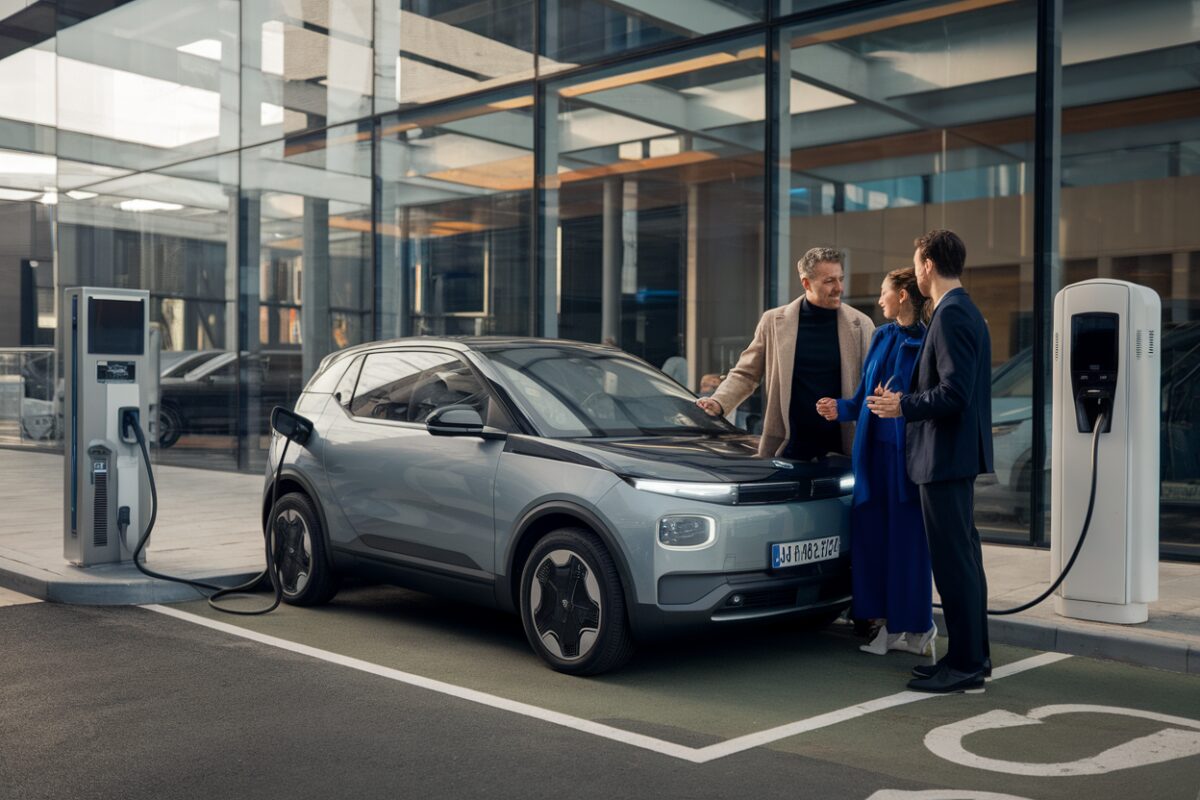
France is weighing a comeback for its “social leasing” program, an effort to put low-income drivers behind the wheel of an electric car for roughly €100 a month, or about $115. The pitch is simple: cheaper monthly payments, cleaner cars, and help for households squeezed by inflation.
The reality is messier. The government is already signaling tighter rules for 2026, a limited number of contracts, and a system designed to avoid the 2024 frenzy, when applications flooded in, websites buckled, and would-be drivers learned that eligibility didn’t guarantee a car.
For Americans, think of it as a federally backed EV lease subsidy with a hard cap on how many people can get it, more like a limited housing voucher rollout than a broad tax credit.
When it could launch, and how many drivers might actually get a car
The biggest unanswered questions for 2026 are timing and scale. Industry sources in France say the government is discussing a program in the same ballpark as 2024: roughly 20,000 to 30,000 leases nationwide.
That cap matters because the subsidy isn’t a one-time check. When the state buys down a lease payment, it commits money over multiple years, which makes budget writers wary, especially as France tries to fund its broader climate agenda without blowing a hole in public finances.
Dealers want clarity at least six months ahead of launch. Without firm dates and guaranteed volumes, they’re reluctant to pre-order cars, and they don’t want a repeat of 2024, when customers showed up convinced they were “approved” even though dealers had no inventory and no delivery timelines.
Another complication: France also offers other EV incentives, including a national “ecological bonus” and local subsidies in places like the Paris region. If those rules change at the same time, consumers can get stuck in a confusing stack of programs, exactly the kind of bureaucracy that causes people to quit mid-application.
Who qualifies: income limits, priorities, and a paperwork gauntlet
At the heart of the 2026 debate is targeting. The most likely approach is an income ceiling based on a household’s official tax reference income, with priority for people who rely on a car to work, especially long-distance commuters.
Applicants should expect heavy documentation: tax notices, proof of address, employment contracts, employer letters, and sometimes evidence of commute distance or annual mileage. Social workers say the system can unintentionally punish people with complicated work lives, gig workers, temps, self-employed drivers, or anyone juggling multiple job sites, because they can’t easily “prove” their situation in neat forms.
Then there’s a quieter filter: the leasing company’s own credit screening. Even with a subsidized payment, a long-term lease is still a financial contract. That means someone can meet the government’s criteria and still be rejected by the lender, an outcome consumer advocates want France to address in 2026 so the program doesn’t create a second, invisible barrier.
Which EVs make the list, and why supply could decide everything
The program only works if cars are actually available. In 2024, demand piled onto a small set of eligible models, and delivery times stretched out. For 2026, French automakers, Renault, Peugeot, and Citroën, are expected to be central players, partly because France wants the political win of supporting European-made vehicles.
The typical eligible cars are small EVs and compact crossovers with 40 to 55 kWh batteries and advertised ranges of about 186 to 249 miles. That’s enough for many daily routines, but real-world range drops with highway speeds, winter temperatures, and heavy heater use. EV trainers warn that drivers doing roughly 75 miles of highway commuting a day will need to plan charging carefully, or they’ll end up hating the experience.
Manufacturing capacity is the choke point. Automakers can’t instantly ramp production, and they have to choose between selling cars normally, fulfilling corporate fleet orders, or allocating vehicles to subsidized programs. If the 2026 leasing plan demands big volumes, it could pull cars out of the regular market and put upward pressure on prices, forcing the government to negotiate hard on supply and lease terms.
Eligibility may also hinge on an “environmental score” tied to where a vehicle is built and how its battery supply chain is sourced. That can lead to confusing outcomes where two similar EVs are treated differently, something dealers say needs to be settled early with a stable, published list.
The “$115 a month” promise, and what it doesn’t include
The headline number, around €100 a month, or about $115, grabs attention. But a long-term lease doesn’t stop at the monthly payment. Contracts often run 36 months and include mileage caps, commonly 12,000 km a year, about 7,456 miles, plus varying levels of maintenance and roadside assistance.
Insurance is frequently extra. Add-ons can push the real monthly cost significantly higher, and that’s where households can get blindsided if they assume the advertised payment is all-in.
Mileage overages are another trap. Drive more than the contract allows and you can get hit with a bill when you return the car, sometimes hundreds of dollars. Consumer advisers say they’ve seen people choose a lower-mileage plan to keep payments down, then exceed the limit and get stuck with a painful end-of-lease charge.
Charging costs also vary wildly. With home charging, drivers can keep costs low; relying on fast chargers can make electricity much more expensive. The program focuses on the car, critics say, but for many families the real make-or-break issue is whether they can reliably charge where they live.
Finally, there’s the return inspection. Leases typically require the vehicle to come back in “standard” condition, and small dents or interior wear can trigger fees, especially for families with kids or anyone parking on the street. Some advisers recommend setting aside about €15 a month (roughly $17) as a buffer to avoid a nasty surprise.
Applications, tech glitches, and delivery delays
The expected process looks like this: pre-register on an online platform, upload documents, get eligibility confirmed, then get routed to a leasing company and a dealer. In 2024, many applicants described it as a digital stampede, crashing pages, incomplete files, and frantic follow-ups. If the platform fails again, access can come down to luck and internet speed rather than need.
Even after approval, drivers still have to find an eligible car that’s actually in stock. Wait times can range from weeks to months, and buyers may be pressured to accept whatever configuration is arriving, different trim, different color, sometimes even a different model class.
Charging installation can be its own bottleneck. In apartment buildings, adding a charger can take three to six months because of approvals and construction schedules. That means some drivers could receive an EV before they have a practical way to charge it at home, especially outside major cities where fast-charging coverage can be thinner.
And unlike selling a used car, you can’t easily “offload” a lease. If someone loses a job, moves, or goes through a breakup, getting out early can be expensive. Advocates want more flexible exit options for vulnerable households, while leasing firms argue they’re financing a vehicle, not a life plan. How France resolves that tension will shape whether the 2026 reboot feels like real help, or another bureaucratic headache.
Key Takeaways
- The 2026 social leasing program depends on a limited number of applications and a tightly controlled timeline
- Eligibility will likely be based on taxable income, with stricter checks and stronger prioritization
- Model availability and delivery lead times will make the difference on the ground
- The low monthly payment doesn’t always cover insurance, charging, and end-of-lease return risks
- The process remains vulnerable to platform glitches, inventory constraints, and charging limitations
Frequently Asked Questions
Will the 2026 social leasing program be open to all low-income households?
No. The program is generally capped, with a limited number of contracts and income requirements. Even if eligible, a household may run into practical hurdles: vehicle availability, approval by the leasing company, or an incomplete application.
Does the $100 monthly payment include insurance and maintenance?
Not always. The monthly payment depends on the contract—term length, mileage allowance, and included services. Maintenance and roadside assistance may be included, but insurance often costs extra, which can significantly change the monthly budget.
What are the main financial risks of a social long-term lease?
Excess mileage charges, reconditioning fees when you return the vehicle, and costly early termination if your personal situation changes. You also need to factor in charging costs, which vary widely depending on whether you can charge at home.
Can you choose any electric model with the social leasing program?
No. A list of eligible models is set based on criteria such as price, availability, and sometimes an environmental score. The models you can actually get also depend on dealer inventory at the time you place the order.
How can you improve your chances of getting a vehicle in 2026?
Get your supporting documents ready ahead of time, watch for when applications open, be flexible on color or trim, and plan your charging solution. Speed helps, but a complete application matters even more.

- Tanguy Matériaux optimise la gestion de sa flotte et réduit sa consommation de carburant grâce à la télématique Webfleet et l’accompagnement de Katalii - juillet 15, 2026
- Défilé du 14 juillet 2026, cérémonie militaire à Paris, forte exposition médiatique, ce que l’État donne à voir - juillet 14, 2026
- 2 votes clés, sanctions rétablies, chargeurs anti-électrique ciblés, ce qui change pour les transporteurs dès maintenant - juillet 4, 2026
