


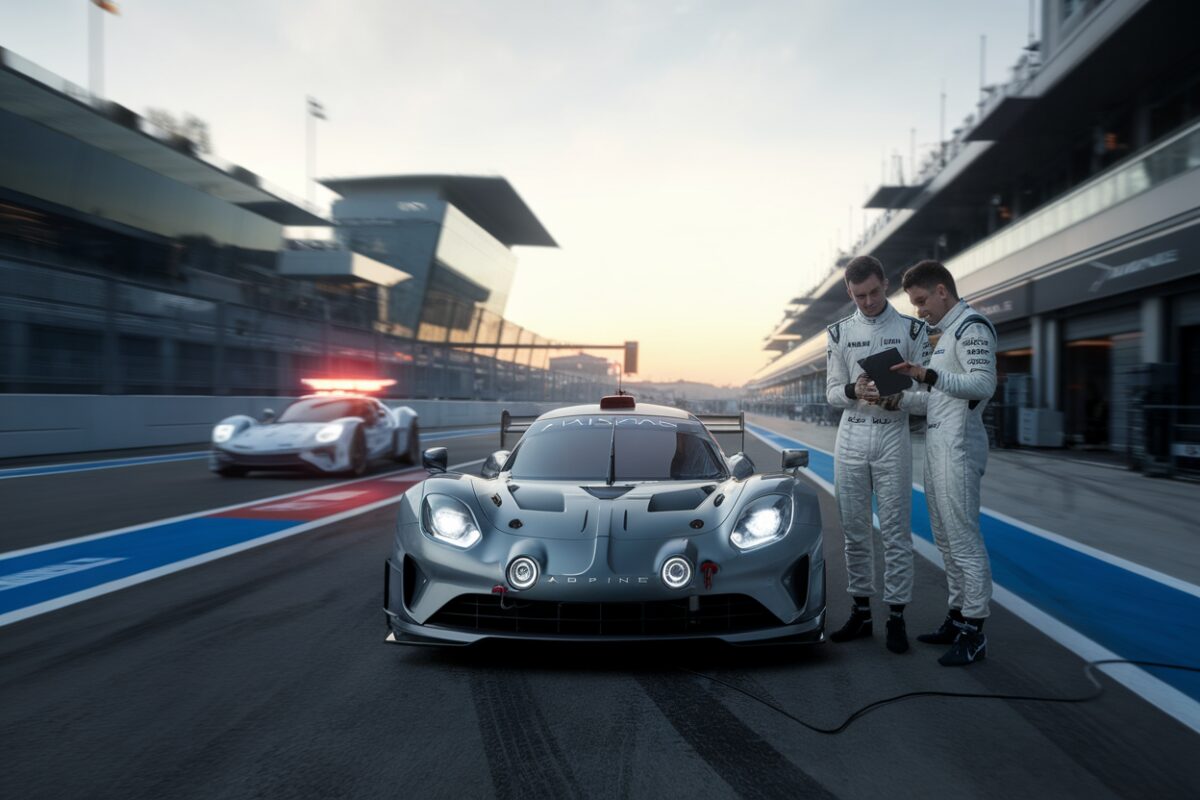
As dawn breaks at the 24 Hours of Le Mans, Alpine is still in the fight, and for a team staring at the end of its top-class Hypercar program, that matters more than ever.
The French automaker’s No. 35 Alpine A424 rolled off the grid in third, a rare front-row-adjacent statement at the world’s most punishing endurance race. In a Hypercar field packed with factory heavyweights, Alpine’s early pace has given it something it hasn’t always had at Le Mans: a realistic shot at a headline result.
And at Le Mans, dawn isn’t poetic. It’s when strategy, reliability, and mental sharpness start separating contenders from the cars just trying to survive.
A third-place start gives Alpine breathing room when the race is most chaotic
Starting third at Le Mans doesn’t win you anything. But it can save your race before it even begins.
For the No. 35 A424, qualifying P3 validated what Alpine insiders had been hinting all week: this car looks better suited to the 8.47-mile Circuit de la Sarthe than it did at earlier stops. And that grid spot changes the opening math, less desperation, fewer risky moves, and a better chance to avoid the kind of early contact that can quietly wreck a 24-hour plan.
Driver Ferdinand Habsburg set the car’s best qualifying time, and Charles Milesi put it at the top of the timing sheet in the first Hyperpole session, signs not just of speed, but repeatability. At Le Mans, one fast lap is trivia. Clean laps, over and over, are currency.
Antonio Félix da Costa locked in the third-place Hyperpole result and kept expectations in check: starting near the front gives you the right to fight. That restraint is the point. Le Mans isn’t won on Thursday night. But a strong grid position can act like shock absorbers, more flexibility on fuel windows, fewer forced passes, and less time trapped in traffic.
One trackside engineer put it bluntly: every overtake here costs you, battery energy, tire life, and risk. Starting third simply reduces the number of times you have to pay that price early, when the field is bunched and mistakes are cheap to make and expensive to fix.
If the night stays clean, Alpine’s discipline could keep it on the lead lap
Le Mans nights can be carnage. They can also be strangely calm.
Alpine pointed to the 2025 race as proof: the overnight stretch was relatively orderly, and the real fight was still alive at sunrise. That kind of race rewards teams that stack steady stints, avoid penalties, and keep the car out of trouble. For the Alpine Endurance Team, the mission is straightforward, turn the night into position, not damage control.
The biggest swing factor is neutralizations. A full-course yellow can be a gift or a trap, flipping fuel strategy and forcing “emergency” stops that blow up carefully planned sequences. Alpine lived that in 2025, when the No. 36 got pushed into an opportunistic stop after a caution. The lesson is simple: at dawn, being on the same lap as the leaders can matter more than one heroic stint.
Night driving also punishes impatience. The Sarthe layout, long straights, high-speed corners, heavy braking zones, demands a constant compromise between top speed and downforce. Alpine says its 2026 prep focused on a package that better exploits the A424’s aerodynamic strengths, but none of that matters if drivers start forcing passes in the wrong places on cold tires.
That same engineer’s critique landed like a warning label: if you want to run up front, stop acting like the night is something that just happens to you. A “clean night” is controlled, entry speeds, passing rules, pit windows, and calm decision-making when the radio gets loud.
Mulsanne’s gravel is a reminder: small mistakes can wreck a big day
Le Mans doesn’t always punish you with a spectacular crash. Sometimes it just steals your race in 20 seconds.
In 2025, Alpine driver Jules Gounon got caught out at Mulsanne after a wheel lock sent him into the gravel. Not dramatic. Just costly, time lost, stress added, strategy scrambled. At this race, that’s often the difference between a top-10 finish and disappearing down the order.
The No. 36 dropped back and had to claw its way forward, handing the car to Mick Schumacher as the team shifted into recovery mode. That’s when fatigue becomes dangerous: drivers try to “get it back” and end up making a second mistake that costs even more.
High-speed sections leave little margin, and a lockup can come from more than driver error, brake balance, tire temps, or a setup that’s slightly off for changing conditions. Alpine has emphasized data analysis and smarter use of tire compounds for the 2026-spec A424. At sunrise, when the track transitions from cold night air to warming pavement, those variables get touchier.
The engineer summed up the chain reaction: you lose 20 seconds, then you lose your plan, then you lose your head. One off can trigger an early pit stop, shift tire windows, shorten a stint, and dump you into heavier traffic. That’s how a “minor” moment becomes a race-long problem.
Alpine’s boss is betting on aero and tires, because Le Mans demands both
Before arriving in northwest France, Alpine centered its 2026 work on aerodynamic efficiency, an unglamorous but essential obsession at Le Mans, where the car has to be fast on the straights without chewing through tires in the corners.
Team leader Bruno Famin described the platform as solid, with encouraging feedback, and framed the goal as fighting regularly near the front in what he called the most competitive field yet. It’s careful language, no victory guarantees, just a trajectory. In endurance racing, credibility comes from repeating progress, not promising miracles.
Tires are the tell. Managing compounds isn’t just engineer-speak; it determines whether you can stretch a stint, avoid sudden drop-off through the fast sections, and keep the car stable as temperatures swing. Dawn is often when gaps open, some cars come alive, others fall off a cliff.
But Alpine also knows the limits of pure performance. A great aero package won’t save you from messy traffic management, a badly timed caution, or a hesitant pit call. At Le Mans, speed is only one part of the sum.
With the Hypercar program winding down, a big Le Mans result would hit differently
The backdrop to all of this is uncomfortable and motivating: Alpine’s Hypercar program is slated to end after this season. That turns every opportunity into a showcase, for the team, the drivers, and a French brand trying to matter in the sport’s premier category.
The competition is brutal. Ferrari arrives as a three-time defending winner in the Hypercar era, chasing a fourth straight Le Mans victory at the top level. The grid is deep with factory operations, and the margins are thin enough that one slow stop or one wrong call under caution can erase hours of work.
Alpine has at least shown it can finish. In 2025, the No. 35 came home 10th, with the No. 36 in 11th after a comeback that included a fight with a Peugeot entry. Not a podium, but proof the team can get both cars to the flag in the sport’s toughest class.
After that race, Habsburg called Le Mans “hard and frustrating,” but said the team never quit and stayed united. That kind of cohesion is exactly what gets tested at sunrise, when exhaustion makes every decision slower and every mistake more likely. If Alpine stays disciplined, the race can still swing on the things that decide Le Mans year after year: a clean stop, a smart read on a caution, and a car that keeps its pace when the sun comes up.
Key Takeaways
- Alpine starts third with the No. 35 A424, which reduces early exposure to traffic
- Managing cautions and overnight driver changes can keep Alpine on the lead lap
- The 2025 Mulsanne example shows the high cost of a minor mistake
- The 2026 work focuses on aerodynamics and tire optimization
- With the program’s planned end, a standout result at Le Mans takes on special significance
Frequently Asked Questions
Why do people say that at daybreak the fight is still on for Alpine?
Because Alpine showed credible pace before the race, with the No. 35 A424 qualifying third, and because dawn is a time when strategy, consistency, and managing cautions can still significantly reshuffle the order.
Does starting third on the grid guarantee a good race?
No. It gives a starting advantage, less immediate traffic, and more strategic flexibility, but the race is decided over 24 hours—reliability, pit stops, cautions, and the ability to avoid mistakes, especially at night, are what matter.
What did Alpine show at the 2025 24 Hours of Le Mans that can help in 2026?
The team brought both cars home and finished in the top ten, with the No. 35 in tenth and the No. 36 in eleventh after a comeback. That points to an ability to finish with both cars and stay solid in the final hours, even after incidents.
Why are aerodynamics and tires mentioned so much in the preparation?
Le Mans demands a trade-off between top speed and downforce, and the race goes through very different temperature phases between night and morning. Getting more out of the aero package and optimizing tire-compound use helps maintain a consistent pace without overconsuming or wearing the car down.
What’s the main risk for Alpine when fatigue sets in?
Small, costly mistakes—like locking a wheel and ending up in the gravel—and hesitant calls during a caution. At daybreak, clear-headedness and team discipline become decisive to stay in the fight.
Sources
- 24 Heures du Mans 2026. Alpine, une dernière chance à transformer en résultat
- WEC Actu: Double arrivée et top dix pour Alpine aux 24 Heures du Mans
- 24H du Mans 2026 EN DIRECT : course, classements, résultats, engagés
- 24 Heures du Mans – Alpine devant en qualifs, Peugeot éliminé
- Alpine shakes down 2026-spec A424

- Nouvelle vignette 2027 : quelles règles selon votre véhicule et vos déplacements ? - octobre 4, 2026
- Les trajets domicile-travail, repenser les accessoires du quotidien - septembre 9, 2026
- Chauffeur privé de prestige : la mise à disposition pour dirigeants et VIP à Bordeaux - septembre 7, 2026
