


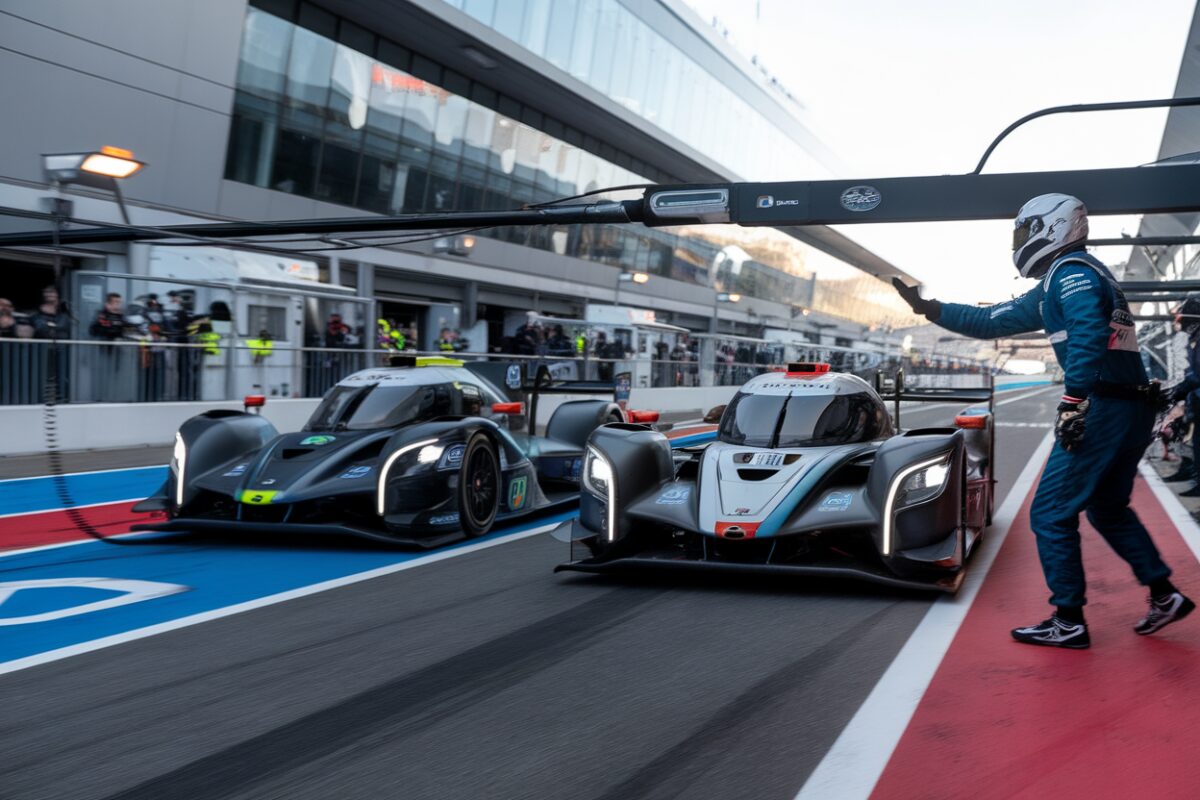
With just three hours left in the 2025 24 Hours of Le Mans, Toyota Gazoo Racing has muscled its way into the dream position: first and second on the road, controlling the pace at the world’s most punishing endurance race.
The No. 8 Toyota leads, with the No. 7 Toyota right behind on the same lap, an eye-catching turnaround after Toyota didn’t start up front and had to fight through traffic to get there. But at Le Mans, a three-hour “lead” can vanish in a single pit mistake, a poorly timed caution, or a mechanical hiccup.
And Toyota knows it. The margins aren’t just measured in lap time, they’re measured at the fuel pump, in tire life, and in the discipline of pit lane, where one speeding penalty has already reshaped the No. 7’s day.
Toyota’s late-race stranglehold starts with the No. 8
The headline with three hours to go is simple: two Toyotas out front, No. 8 leading No. 7. The way they got there is what matters. This wasn’t a calm, wire-to-wire cruise, it was a methodical climb built on clean stints and sharper pit calls than the cars around them.
Toyota’s move took shape early, when the team pitted slightly earlier than several direct rivals. That opened a strategic window, and after the first major cycle of stops, the No. 8, driven at that point by Sébastien Buemi, cycled into the lead.
At Le Mans, clean air is priceless. Less traffic means fewer risks threading past slower GT3 cars and LMP2 machines, and it makes it easier to manage temperatures and fuel consumption over long stints.
Buemi didn’t just inherit the top spot, he defended it with steady, repeatable pace, stretching a small gap by stacking clean laps and making decisive passes through traffic. In a packed Hypercar field, that’s how you build breathing room without burning up tires or inviting mistakes.
Why pit timing, not raw speed, has Toyota in front
If Toyota is leading with three hours left, look first at pit sequencing. The team leaned into earlier stops than some competitors, aiming to rejoin the track in clearer air and avoid getting trapped behind clusters of slower cars.
That matters more at Le Mans than in almost any other race. A stop that’s merely fast isn’t enough, it has to be timed so the car exits into manageable traffic. Rejoining behind a swarm of GT3 cars can cost seconds per lap in the wrong sections of the 8.47-mile (13.6-kilometer) Circuit de la Sarthe, especially where passing is risky.
Teams also game out cautions and slow zones, which can flip the order if they land at the wrong moment. The tradeoff is real: pitting early can create an opening, but it can also leave you exposed if a neutralization hits right after you’ve stopped.
With three hours to go, Toyota’s advantage looks strong, but it’s still fragile, especially if rivals gamble on longer stints or double-stinting tires to steal track position late.
A 50-second pit-lane penalty shows how fast Le Mans can bite
The No. 7 Toyota is the cautionary tale inside Toyota’s own garage. The car took bodywork damage on the opening lap, then got hit with a 50-second stop-and-go penalty for speeding in pit lane.
Fifty seconds at Le Mans isn’t a slap on the wrist. It’s a crater, time you can’t “make up” in one heroic lap without taking on extra risk in traffic.
Still, the No. 7 crew, Mike Conway, Kamui Kobayashi, and Nyck de Vries, dragged the car back into contention the hard way: small gains, clean pit entries and exits, and relentless efficiency passing slower cars without inviting contact or more penalties.
The comeback underscores Toyota’s operational strength. It also highlights the pressure now: when you’re running 1-2 late, every procedure has to be perfect, because the downside is enormous.
BMW, Cadillac, and Alpine keep the pressure on
Toyota may be leading, but it isn’t alone. A tight chase group featuring BMW, Cadillac, and Alpine has hovered close enough that a well-timed caution or pit-cycle shuffle could snap the gap shut.
At one key moment, the BMW No. 20 was tracked just seconds off the lead. Cadillac and Alpine have been in the same orbit, turning the fight into less of a duel and more of a funnel, one mistake up front, and multiple cars can pounce.
The race has already shown how quickly the order can scramble. The BMW No. 15 started on pole but dropped early, a reminder that leading off the line at Le Mans doesn’t protect you from a messy opening stint, traffic, or a strategy that doesn’t land.
In a dense Hypercar pack, drivers can’t simply “manage.” They have to stay in the performance window while navigating slower classes, protecting brakes and tires, and avoiding the kind of curb strikes and minor contacts that can snowball into major repairs.
The final three hours: protect the car, but don’t blink
With three hours left, the race shifts from outright pace to risk management. A slightly slow stop, a sensor warning, a brush with a GT3 car, any of it can detonate a winning run.
That’s not theoretical. In a stark reminder of endurance racing’s cruelty, Toyota has pointed to a mechanical issue that cost the No. 8 more than 20 minutes and dropped it out of the fight, with the car finishing 16th. It’s the kind of collapse that makes any late lead feel temporary.
The 2025 winner, meanwhile, was AF Corse’s No. 83, driven by Robert Kubica, Ye Yifei, and Phil Hanson, after a grueling closing stint that demanded as much mental clarity as speed. (AF Corse is Ferrari’s longtime partner team, a major force in top-level sports car racing.)
Toyota’s recent Le Mans history is a mix of dominance and heartbreak, and that memory hangs over every decision in the closing hours. Running 1-2 is power. It’s also exposure, because at Le Mans, the race doesn’t end when you take the lead. It ends when you take the checkered flag.
Key Takeaways
- With three hours to go, the two Toyotas hold the top two spots on track.
- An earlier pit-stop strategy allowed the #8 to rejoin in the lead after the first round of stops.
- The #7 had to deal with damage at the start and a 50-second stop-and-go penalty.
- BMW, Cadillac, and Alpine remain close enough to capitalize on pit-stop timing or a caution period.
- The finish underscored how fragile endurance racing can be: the #8 will finish 16th after a mechanical issue.
Frequently Asked Questions
Why was Toyota leading with three hours to go?
Toyota benefited from a well-timed pit stop sequence, pitting slightly earlier than some rivals. That window allowed the #8 to cycle into the lead after the first round of stops, then hold the position with a fast, consistent stint while minimizing time lost in traffic.
What penalty did the Toyota #7 receive during the race?
The Toyota #7 was given a 50-second stop-and-go penalty for speeding in the pit lane. In such a tight race, that kind of penalty is a major loss and forces the team to claw time back through a series of small gains without making any further mistakes.
Who won the 2025 24 Hours of Le Mans?
Victory went to AF Corse #83, driven by Robert Kubica, Ye Yifei, and Phil Hanson. The crew held on to the end with a very long, demanding final stint, in a race where several manufacturers were still in contention for the result.
What happened to the Toyota #8 after it led?
Toyota says a mechanical issue cost the #8 more than 20 minutes, knocking it out of the fight at the front. The car ultimately finished 16th—a typical endurance-racing turnaround where an on-track lead doesn’t protect you from a late technical problem.
Sources
- Le Mans 24h, H1: Toyota takes lead from 15th on the grid
- [PDF] 2025 24 HOURS LE MANS – PROVISIONAL ENTRY LIST
- Le Mans 24 Hours Live Commentary and Updates | Live text | Motorsport.com
- 2025 WEC ROUND 4 Le Mans 24 Hours: Race | RELEASE | WEC | GAZOO Racing
- TOYOTA GAZOO Racing Opens Le Mans 24 Hours Special Website | Toyota | Global Newsroom | Toyota Motor Corporation Official Global Website

- Essence, diesel ou électrique : voici combien coûte réellement une voiture sur 15 000 km en France en 2026 » - octobre 9, 2026
- Blocage en cours devant l’Institut Catholique de Paris : mobilisation inédite au cœur du 6ᵉ arrondissement - octobre 8, 2026
- Retour en classe ou poursuite des blocages ? Journée test dans les lycées face à la mobilisation des élèves - octobre 7, 2026
