


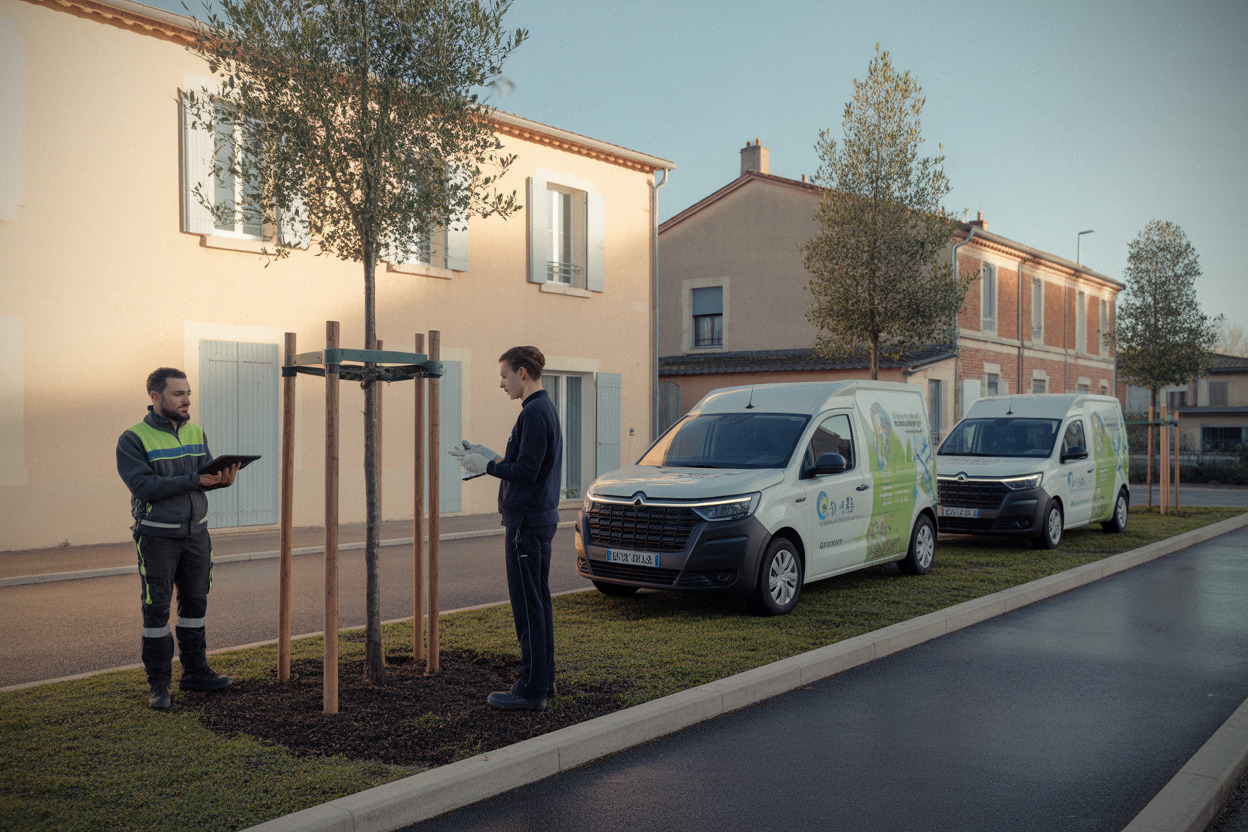
In a small town just outside Toulouse in southern France, local leaders are pushing a new wave of climate-focused changes that will hit residents where they live: schools, streets, parks, and public buildings.
Montrabé, a commuter community in the Haute-Garonne department, roughly the French equivalent of a county, says it’s accelerating its “ecological transition” as energy costs stay high, summers get hotter, and residents demand visible results. The plan spans everything from cutting utility use in municipal buildings to safer walking and biking routes and more shade in public spaces.
The challenge is turning broad environmental goals into concrete projects people can see, and measuring whether they’re working.
Turning climate goals into day-to-day city operations
In Montrabé, the push isn’t framed as a one-off announcement. It’s being built into how the town runs: how it schedules public works, tracks energy use, and sets purchasing rules.
That puts the spotlight on municipal staff, the people who translate political promises into new lighting systems, building upgrades, and changes in how public facilities operate. The town is also under pressure to show progress in ways residents can understand, with clear timelines, project scopes, and basic performance indicators.
Montrabé also operates in the orbit of Toulouse Métropole, the regional governing body that coordinates major services and planning across the metro area, similar to how a U.S. metro region might manage transportation and development across multiple suburbs. That means the town can’t act entirely on its own, especially on mobility and infrastructure, even as it controls local streets and public spaces.
Public buildings and streetlights: the fastest path to lower energy use
The first and most immediate lever is energy, an especially sensitive issue for local governments across Europe after years of volatile power prices. Municipal buildings like city hall, schools, community rooms, and sports facilities can consume a large share of a town’s operating budget.
Montrabé is focusing on practical fixes that can deliver measurable savings: tuning boilers, improving insulation in the most exposed rooms, swapping out lighting, flagging abnormal spikes in usage, and tightening heating schedules. Streetlighting is another highly visible target because it touches public safety, budgets, and nighttime ecosystems. Any changes, like shifting to lower-energy fixtures or adjusting operating hours, need clear public explanation to avoid backlash.
But the town can’t renovate everything at once. Like many small municipalities, it has to prioritize, often starting with the most heavily used buildings or the ones that are most expensive to heat and cool. Schools typically rise to the top because they’re occupied for long stretches and closely watched by families.
Officials also want to use utility bills as a management tool, not just an expense line. A drop in consumption can validate a repair or upgrade; a sudden increase can signal equipment problems. The town is expected to present year-over-year comparisons in 2026, separating changes driven by energy prices from changes driven by actual usage, because a smaller bill doesn’t always mean less energy burned.
Walking, biking, and shade: local fixes for a commuter town
Transportation is the other big piece, especially in a suburb where many residents rely on cars for work, shopping, school drop-offs, and connections to regional transit. Montrabé’s strategy centers on short trips: making walking routes safer, improving bike connections, and calming traffic on certain streets.
School zones are a pressure point. Morning drop-off and afternoon pickup can turn into a daily squeeze between drivers, kids on foot, and cyclists. The town is looking at straightforward street design moves, clearer markings, better-organized parking, upgraded crosswalks, and slower-speed zones, but officials acknowledge that real-world behavior can differ from what looks good on a planning map. Input from parents, neighbors, and school staff will shape what sticks.
Green space is being treated as climate infrastructure. With hotter summers, the town is emphasizing planting, preserving permeable ground that absorbs water, and increasing shade in public areas. Protecting mature trees can matter as much as planting new ones, since established trees provide immediate cooling benefits.
The goal is to reduce “heat islands”, those sun-baked plazas, schoolyards, and transit stops that become punishing during heat waves. Residents will judge the policy less by slogans than by whether a walk to school feels safer and whether public spaces feel cooler and more livable.
Trash, purchasing, and school cafeterias: the less visible work that can stick
Some of the most durable changes won’t come from construction crews at all. Montrabé is also targeting everyday habits: reducing waste, improving sorting in public facilities, cutting single-use plastics, and limiting food waste. That requires simple rules people will actually follow, and staff who can keep the system running without confusion.
Public purchasing is another lever with real bite. The town can bake sustainability into contracts for supplies, cleaning products, furniture, and building materials. The balancing act is avoiding sweeping promises and instead adopting standards that are enforceable and affordable, while recognizing that longer-lasting products can save money over time.
School meals are likely to be one of the most closely watched arenas. Families care about food quality, sourcing, composting or sorting organic waste, and portioning that reduces what gets tossed. The town’s credibility will hinge on whether it can meet nutrition standards, keep costs manageable, work with suppliers, and cut waste without turning lunch into a political fight.
Local associations, sports clubs, cultural groups, and event organizers, are also part of the plan. Community events can add recycling stations, switch to reusable cups, reduce printing, and encourage lower-impact transportation. Town officials may support those shifts with practical guides or shared equipment.
Upcoming municipal decisions are expected to clarify the timeline, funding, and the first metrics the town will use to prove whether this greener push is delivering real-world results.


Key Takeaways
- Montrabé is stepping up its ecological transition at the municipal level.
- Public buildings are among the first areas for action.
- Short trips and green spaces are local levers.
- Waste, public procurement, and schools involve everyday habits.
Frequently Asked Questions
Where is Montrabé located?
Montrabé is a municipality in the Haute-Garonne department, located east of Toulouse. Its environmental efforts are part of a suburban area shaped by daily commuting, municipal facilities, and residents’ expectations for quality of life.
What are the main levers for the municipality’s ecological transition?
The most direct levers include improving the energy efficiency of public buildings, street lighting, local mobility options, adding greenery, reducing waste, public procurement, and awareness-raising in municipal facilities.
Why are municipal buildings a priority?
They represent a significant share of operating costs and serve many users. Better monitoring of energy use, technical adjustments, and targeted renovations can reduce costs while improving comfort.
How might residents notice this acceleration?
The most visible effects may include calmer streets, safer pedestrian routes, greener public spaces, more energy-efficient facilities, and clearer recycling guidelines.

- Les trajets domicile-travail, repenser les accessoires du quotidien - septembre 9, 2026
- Chauffeur privé de prestige : la mise à disposition pour dirigeants et VIP à Bordeaux - septembre 7, 2026
- L’application Leocare est-elle la plus téléchargée dans l’assurance en France ? - août 25, 2026
