

In an era of e-signatures and cloud storage, a low-tech tool is quietly regaining ground in offices: the date stamp.
Across Europe, driven in part by tighter compliance expectations and a renewed obsession with audit trails, companies are rediscovering “smart” administrative stamps that mark documents quickly, consistently, and with fewer mistakes than handwriting. The pitch is simple: when every invoice, contract, and internal approval needs a clear timeline, a crisp, standardized date can still matter.
For American readers, think of it as the analog cousin of a digital timestamp, useful when paperwork still moves through multiple hands, and when proving “when” something happened can be as important as proving “what” happened.
Why tracking paper documents still matters
Even with modern document management systems, plenty of organizations still rely on paper at key moments, mail intake, vendor invoices, HR files, legal packets, and compliance binders. When disputes pop up, the ability to show a clean chain of custody can prevent headaches, save time, and reduce finger-pointing.
A date stamp creates a simple, repeatable record: received on this day, approved on that day, paid on another. It’s not glamorous, but it’s the kind of detail that can make audits smoother and internal accountability clearer.
What a date stamp actually does, and why it beats handwriting
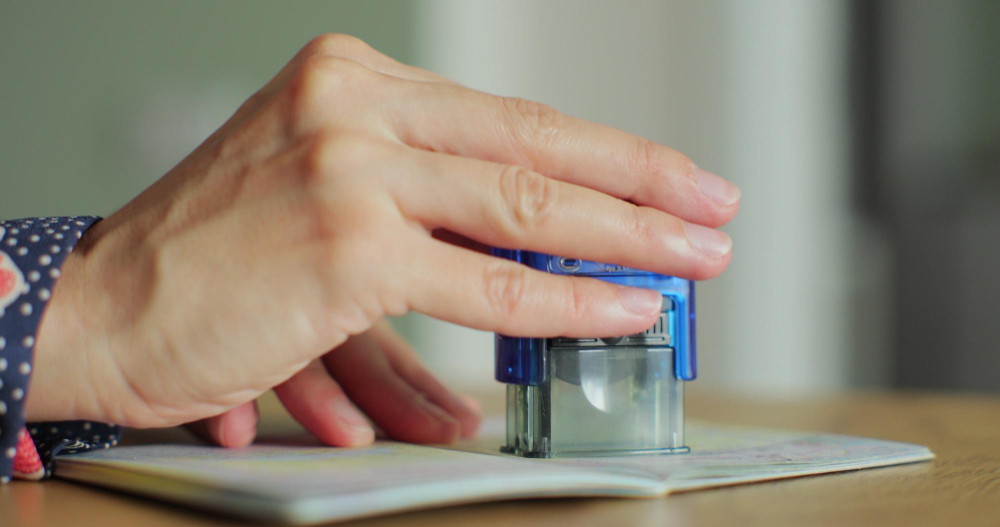
A date stamp is built around a rotating mechanism that lets users set the day, month, and year. Press it onto paper and it prints an instant, legible date, no scribbles, no guessing, no “is that a 3 or an 8?”
Many modern models are self-inking, meaning the ink pad is built in. That speeds up repetitive administrative work and cuts down on the small errors that add up when staff are dating documents manually all day.
The main types of date stamps offices use
Manual date stampstypically use small wheels you turn by hand. They’re fine for occasional use, say, a small office that only stamps a few documents a week.
Automatic/self-inking stampsare designed for frequent use. One press delivers a consistent imprint, making them a better fit for mailrooms, accounts payable teams, and front desks.
Combination stampsadd custom text alongside the date, common examples include “RECEIVED,” “APPROVED,” or “PAID.” That extra context can make filing and follow-ups faster, especially when multiple departments touch the same paperwork.
Where date stamps pull their weight: invoices, contracts, and compliance
The biggest value is operational: stamping documents as they enter a workflow makes it easier to track deadlines, payment cycles, and approval timelines. For invoices, a “received” date can help settle disputes about late fees or processing delays. For contracts, it can clarify when a document was submitted, reviewed, or finalized.
Standardized stamping also reduces confusion when teams use different date formats. In the U.S., most people expect month/day/year; in much of Europe, it’s day/month/year. A consistent internal standard, paired with a clear stamp layout, can prevent costly mix-ups.
Customization: the “smart” part is clarity
These aren’t your grandfather’s generic rubber stamps. Businesses increasingly customize stamps with short labels (“RECEIVED,” “VALIDATED”), department names, or even a company logo to make documents easier to identify at a glance.
That visual consistency can also signal professionalism, especially for client-facing paperwork, because it makes records look uniform and intentional rather than improvised.
How to keep a stamp from turning into a smudgy mess
Heavy use demands basic maintenance. Self-inking models need re-inking or pad replacement once impressions start fading. Occasional cleaning helps prevent dust buildup that can blur the print.
For the sharpest imprint, offices often test stamps on the paper they use most, some stocks absorb ink differently. The goal is a clean mark with moderate pressure, not a hard slam that distorts the text.
The bigger picture for 2026: old-school tools in a compliance-heavy world
The renewed interest in date stamps reflects a broader reality: even as businesses digitize, regulators and auditors still care about traceability. And many workflows remain stubbornly hybrid, part email, part PDF, part paper.
For organizations trying to tighten documentation without overhauling entire systems, the humble date stamp is an easy upgrade: cheap, fast, and surprisingly effective at answering the question that drives so many disputes, “When did this happen?”


- Eurostar lance son application ChatGPT pour préparer ses voyages en Europe - août 18, 2026
- Tanguy Matériaux optimise la gestion de sa flotte et réduit sa consommation de carburant grâce à la télématique Webfleet et l’accompagnement de Katalii - juillet 15, 2026
- Défilé du 14 juillet 2026, cérémonie militaire à Paris, forte exposition médiatique, ce que l’État donne à voir - juillet 14, 2026
