


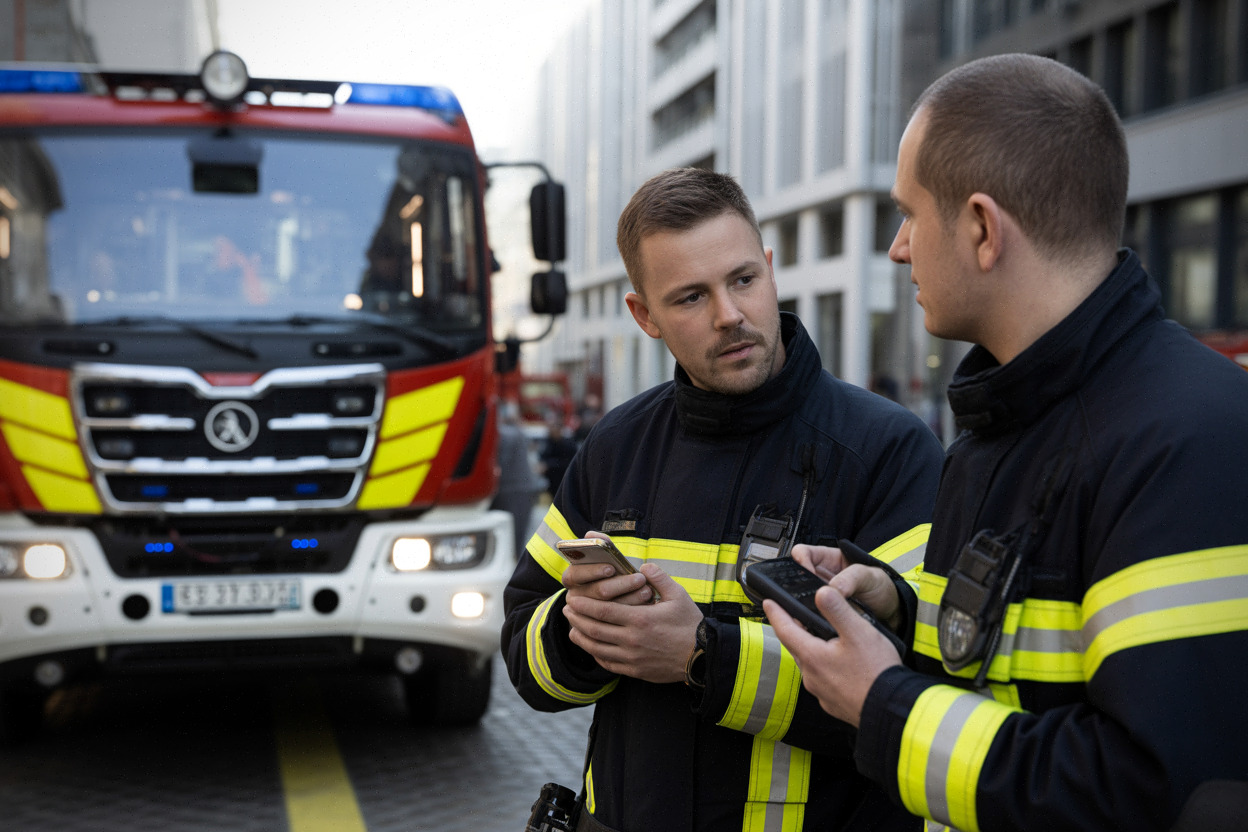
Brussels’ firefighters and emergency medical crews are staying on strike after negotiations ended with no deal, a standoff that’s now putting intense pressure on the Belgian capital’s regional government to keep life-or-death response times from slipping.
The walkout, reported by Belgian outletL’Avenir, centers on SIAMU, the Brussels agency that handles fire suppression and emergency medical calls in a dense city of about 1.2 million people and the de facto hub of the European Union. Even during a labor dispute, officials are expected to keep core rescue operations running.
For residents, the immediate question is simple: when you call for help, will someone still show up fast?
Talks ended without a deal, and firefighters kept the pressure on
The latest meeting between management, unions, and regional authorities failed to produce a compromise strong enough to pause the strike. Public details about what was discussed remain limited, but the decision to extend the walkout signals the two sides are still far apart on issues firefighters consider urgent.
SIAMU isn’t a typical municipal department. It’s the front line for fires, serious crashes, and medical emergencies, calls where minutes can mean the difference between rescue and tragedy. That reality makes any strike here politically explosive, even if crews don’t fully shut down operations.
Emergency calls are still being answered, but non-urgent work may slow
Officials say critical interventions will continue across Brussels. In practice, that usually means a “minimum service” model: enough staffing and apparatus to respond to the most serious incidents, while lower-priority tasks are delayed or scaled back.
Brussels residents are still instructed to use the usual emergency numbers, 112 for ambulance and fire response (similar to 911 in the U.S.). Belgium also uses 100 for urgent medical help in some contexts, but the strike doesn’t change how people should seek emergency assistance.
The strain tends to show up behind the scenes: fewer available crews, longer waits for secondary calls, and fatigue for the firefighters who remain on duty while tensions run high.
Staffing, schedules, and equipment are at the heart of the dispute
Firefighter labor fights rarely hinge on a single demand, and this one appears no different. The dispute involves staffing levels, shift organization, training, equipment, and broader recognition of the job’s toll, issues that directly affect safety on the fireground and in medical response.
Work hours are often a flashpoint in emergency services. Long shifts, overnight calls, mandatory call-backs, and repeated exposure to traumatic scenes can grind down responders. Firefighters typically want concrete guarantees, clear rules, enforceable staffing plans, and schedules that don’t push crews past safe limits.
Equipment and readiness are also central. Brussels is a compact, high-traffic city with tunnels, high-rises, and industrial zones, an environment that demands well-maintained vehicles, reliable gear, and procedures that can pivot quickly from an apartment fire to a highway crash to a medical emergency.
Brussels’ regional government is under the microscope
The political stakes are high because Brussels is governed as its own region within Belgium, with regional leaders responsible for funding and oversight of key public services. A transit strike is disruptive; a firefighter strike hits public safety head-on.
Unions also hold unusual leverage here: firefighters are among the most trusted public servants, and their warnings about staffing and equipment can resonate with the public. At the same time, unions face pressure to ensure the strike doesn’t endanger residents, keeping the focus on political and administrative decision-makers.
What happens next likely depends on whether officials bring in mediation, move to technical working sessions, or give negotiators a clearer mandate backed by money and timelines. The longer the strike lasts, the harder it becomes to manage schedules and maintain readiness, especially if Brussels faces a major fire or a high-casualty incident that tests the system’s limits.


Key Takeaways
- Brussels firefighters are continuing their strike after a meeting ended without an agreement.
- Emergency responses must continue to be provided in Brussels.
- The dispute centers on staffing and resources, organization, and working conditions.
- The Brussels Region remains under pressure to quickly restart negotiations.
Frequently Asked Questions
Why are Brussels firefighters continuing the strike?
They are extending the action after a meeting that did not lead to an agreement. Publicly available information indicates an ongoing disagreement between staff representatives, service management, and the relevant authorities.
Are emergency services still operating in Brussels?
Yes. In a fire and emergency medical service, life-saving missions must continue to be provided. Residents should keep calling the usual emergency numbers in case of a fire, accident, or serious medical problem.
What is at stake in the labor dispute at SIAMU?
The issues involve work organization, staffing levels, equipment and resources, and recognition of the constraints specific to emergency response jobs. These points directly affect team safety and the quality of service provided to the public.

- Les trajets domicile-travail, repenser les accessoires du quotidien - septembre 9, 2026
- Chauffeur privé de prestige : la mise à disposition pour dirigeants et VIP à Bordeaux - septembre 7, 2026
- L’application Leocare est-elle la plus téléchargée dans l’assurance en France ? - août 25, 2026
