


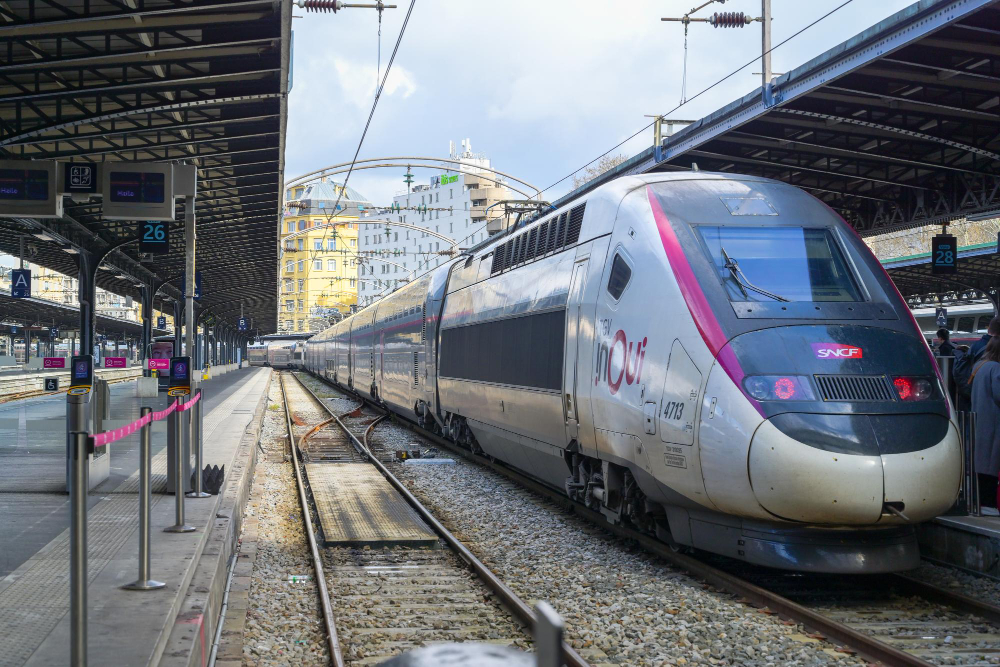
Eurostar is stepping directly into the AI chat window. Starting Aug. 18, 2026, the high-speed rail operator will roll out an official “app” inside ChatGPT, making it the first European rail company to launch a ChatGPT-based service across multiple countries.
The tool lets travelers search routes, check schedules, compare trip times, and view available fares through a conversation, then kicks them over to Eurostar’s website to actually buy tickets. The launch targets users in the U.K., Belgium, and the Netherlands, key markets on Eurostar’s cross-border network linking London with cities including Paris, Brussels, and Amsterdam.
Eurostar’s AI play: meet customers where they’re already searching
Eurostar says the move is driven by a measurable shift in how people plan trips. Between January 2025 and June 2026, traffic sent to Eurostar.com from AI platforms jumped fivefold, a 500% increase.
Instead of waiting for travelers to start on its website, Eurostar is trying to intercept those searches at the moment they happen inside ChatGPT, then funnel customers to its booking flow.
How the Eurostar “app” inside ChatGPT works
The pitch is simplicity: ask a question in plain English, typed or spoken, and get travel options back without filling out the usual booking form fields.
You might ask, “Find me a Paris-to-London train this weekend,” or request a comparison of departure times between Brussels and Amsterdam. ChatGPT acts as the conversational front end, while Eurostar supplies the underlying schedule and fare information.
What it won’t do: sell you a ticket inside ChatGPT. When you’re ready to book, the tool redirects you to Eurostar.com to complete the purchase. To use it, travelers must connect their ChatGPT account to the Eurostar app.
Why Eurostar is betting on ChatGPT specifically
Eurostar’s internal numbers suggest ChatGPT is already the dominant AI gateway to its site. In June 2026, the company said 85% of AI-driven traffic to Eurostar.com came from ChatGPT.
That traffic is still a small slice of overall sales, but it’s no longer trivial: between May and July 2026, Eurostar said AI tools accounted for roughly 0.8% to 1% of bookings on its site. For a major operator, even a one-percentage-point shift can translate into meaningful revenue, especially if the trend keeps climbing.
What changes for travelers: fewer clicks, more natural searches
Traditional booking engines force travelers to translate a trip into boxes: origin, destination, date, time, passenger count. A conversational interface lets people describe what they actually want, like leaving Paris Friday night, returning from London Sunday, and weighing options based on budget.
The other advantage is iteration. If the first option doesn’t work, you can adjust in the same thread, earlier departure, different day, alternate route, without starting over from scratch.
Why this matters on an international rail network
Eurostar’s network spans multiple countries, with service to more than 20 destinations across Germany, Belgium, France, the Netherlands, and the U.K. That kind of cross-border planning can quickly turn into a maze of searches, especially for multi-city trips.
The ChatGPT tool is designed to act as a front door: identify viable routes and prices quickly, then move to Eurostar’s site or mobile app to finalize the booking.
What Eurostar says it wants to build next
The summer 2026 launch is just a first version. Eurostar says it’s exploring upgrades that go beyond basic schedule lookups, like making it easier to discover destinations on the Eurostar network, improving network visualization, suggesting trip ideas based on prompts, and simplifying access to certain fare deals.
The company hasn’t provided a timeline for those additions, and it also says it’s considering expanding to other conversational assistants beyond ChatGPT.
Eurostar is also expanding its physical rail capacity
The AI rollout comes as Eurostar prepares for longer-term growth on the tracks. The company currently operates 51 high-speed trains and says it runs Western Europe’s largest international high-speed network.
Eurostar carried 20 million passengers in 2025 and has ordered up to 50 double-decker “Celestia” trains from French rail manufacturer Alstom. The first of those trains are expected to enter service starting in May 2031.
In other words, Eurostar is pursuing two tracks at once: boosting capacity over the next several years while making trip planning faster right now, especially for travelers who increasingly begin their search inside an AI chat.
One key caveat: you still need to verify the final price
Eurostar is positioning the ChatGPT experience as a planning and search tool, not a replacement for its booking system. Fares can change based on availability and timing, and the final price is the one shown on Eurostar.com at checkout.
| 📊 Indicateur | 📅 Période | 🔢 Résultat | 💡 Ce que ça montre |
|---|---|---|---|
| Trafic provenant de l’IA | Janvier 2025 à juin 2026 | 🚀 Multiplié par 5 | Les assistants IA prennent rapidement du poids |
| Part de ChatGPT dans le trafic IA | Juin 2026 | 🤖 85 % | ChatGPT domine largement les visites issues de l’IA |
| Réservations issues d’applications IA | Mai à juillet 2026 | 🎫 0,8 à 1 % | L’IA génère déjà des ventes mesurables |
| Passagers Eurostar | 2025 | 🚄 20 millions | Le service vise un réseau international déjà très fréquenté |

- Ce que les directions financières ignorent vraiment sur les coûts d’impression en entreprise - octobre 6, 2026
- Eurostar lance son application ChatGPT pour préparer ses voyages en Europe - août 18, 2026
- Tanguy Matériaux optimise la gestion de sa flotte et réduit sa consommation de carburant grâce à la télématique Webfleet et l’accompagnement de Katalii - juillet 15, 2026
