


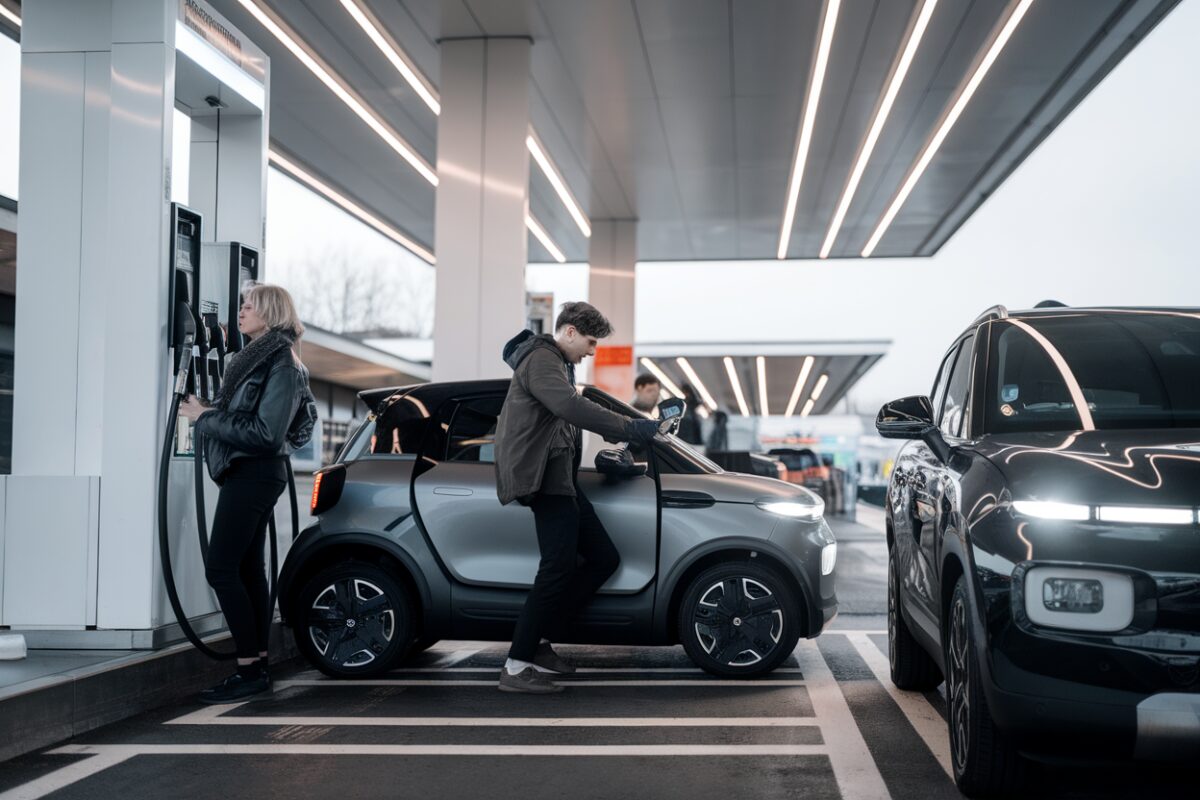
Two of France’s biggest supermarket chains are once again dangling a familiar lure: “gas at cost,” sold with no retail markup for a limited time. The pitch is simple, fill up without the station’s profit baked in, and it’s aimed squarely at drivers who feel every spike at the pump.
But the fine print matters. Not every station participates, the deals often run only on specific days or weekends, and the real savings can be smaller than the signs suggest, especially once you factor in lines, sold-out pumps, and the time it takes to chase a bargain.
What “at-cost” gas actually means in France
Leclerc and Intermarché, roughly comparable to big U.S. superstores that pair groceries with low-margin gas, periodically run “prix coûtant” promotions. During a short window, they remove their retail margin on fuel to drop the posted price.
That doesn’t mean taxes disappear. In France, as in the U.S., government taxes and wholesale costs make up most of what drivers pay per gallon. So the promotion mainly trims the few cents of markup the retailer normally keeps.
Drivers who plan around the dates can feel it. One salesman interviewed in western France said the savings aren’t life-changing, but if you’re filling up twice a week, even a small discount adds up.
The deal is real, but the savings are usually just a few dollars
In the original reporting, typical savings were described as about €0.03 to €0.06 per liter. At today’s rough exchange rate, that’s about $0.12 to $0.25 per gallon.
On a “standard” 50-liter fill-up, about 13.2 gallons, that works out to roughly €1.50 to €3 saved, or about$1.75 to $3.50. A larger 65-liter tank (about 17.2 gallons) might save around$2.25 to $4.75, depending on the station’s usual margin.
Which fuel you buy matters, too. The article notes that diesel and regular gasoline don’t always move the same way week to week, so the best deal can flip depending on market swings and local supply.
Why timing and location can make or break the bargain
These promotions don’t always apply everywhere. Some stations sit out due to construction, supply constraints, or local operator decisions. Hours also matter: a station open 24/7 can move far more fuel during a promotion than one that shuts down early, which can translate into very different crowd levels.
And crowds are the hidden cost. If you drive out of your way and then idle in a long line to save about $3, you may burn time, and fuel, erasing the benefit. The best version of this deal is when the station is already on your route.
Expect lines, and sometimes empty pumps
When the “at-cost” announcement hits, some stations see a weekend rush that feels like a holiday travel crush: lines spilling into access roads, tempers rising when a pump goes down, and staff trying to manage traffic with the same number of lanes and no extra space.
Fuel shortages can happen, especially for higher-grade gasoline, as some drivers “upgrade” thinking they’re maximizing the discount. Station managers can order more, but deliveries are limited by trucking schedules and hazardous-material transport rules. Translation: the tanker truck doesn’t teleport, and late arrivals can find the deal already gone.
In some towns, local police get involved when backups start blocking streets, turning a cost-of-living promotion into a traffic headache.
Highway gas stays expensive, promotions don’t change that
The French article highlights a stark gap between supermarket stations and highway service areas. On highways, prices can run about €0.15 to €0.25 more per liter, roughly$0.60 to $1.00 more per gallon.
On a 50-liter (13.2-gallon) fill-up, that difference can mean roughly €10 to €15, about$11.50 to $17.50, even before any “at-cost” weekend enters the picture. The promotion doesn’t “fix” highway pricing; it just reminds drivers how much convenience costs.
Independent stations feel the squeeze
For independent operators, these promotions can sting. Unlike supermarket giants, mom-and-pop stations often can’t afford to give up margin and make it back on grocery carts and household goods.
One rural station manager quoted in the article described a noticeable drop in business when the big chains run at-cost weekends, customers will drive farther to save a few bucks, leaving smaller stations with fewer sales and the same overhead.
How drivers can save more than an at-cost weekend
The article’s bottom line is blunt: comparing prices and cutting consumption often beats chasing a short promo. Price-comparison apps can help spot stations that quietly match or undercut the “at-cost” price without the marketing, and without the lines.
Maintenance can also pay off. The piece cites an example of reducing fuel use by 0.3 liters per 100 km, about 0.8 gallons per 1,000 miles. Over 15,000 km a year (about 9,300 miles), that’s roughly 45 liters saved, about 11.9 gallons, potentially more valuable than a couple of promotional fill-ups.
Carpooling, consolidating trips, and loyalty programs can shave costs too, though loyalty perks often come back as store credit rather than immediate pump savings, useful only if you actually shop there.
For French drivers, these at-cost weekends are a short-term pressure valve. For everyone else watching from afar, it’s a familiar lesson: the biggest “discount” at the pump is usually the one you get by not burning the fuel in the first place.
Key Takeaways
- Selling at cost mainly cuts the margin; taxes still make up most of the price per gallon.
- Typical savings are often just a few euros per fill-up, depending on how much you buy and the fuel type.
- These promotions draw big crowds, with risks of long lines and running out of fuel.
- Highway gas stations remain much more expensive, even during these weekends.
- Comparing prices and cutting consumption often matters more than a one-off promotion.
Frequently Asked Questions
What exactly does “fuel at cost” mean?
It means the retailer temporarily removes its retail margin on fuel for a set period. The posted price still includes taxes and unavoidable costs. So the savings mainly come from the few cents per liter that the station would normally add as margin.
How much can you save on a full tank at Leclerc or Intermarché?
At big-box retailer stations, savings are often around 3 to 6 cents per liter, sometimes more depending on the period. On 50 liters, that typically comes to about €1.50 to €3. The savings increase with a larger tank or more frequent fill-ups.
Why are there lines during these promotions?
Even a modest price drop draws a lot of drivers into a short time window. The station’s capacity—number of pumps, flow rate, and access—doesn’t increase, which naturally creates backups, especially during weekend peak hours.
Do all Leclerc and Intermarché stations take part?
No. Participation can vary by location due to supply constraints, construction, or local decisions by store operators. You need to check which stations are included through the retailer’s official communications or on site.
What are some alternatives to pay less without waiting for a “fuel at cost” promotion?
Compare prices using apps, avoid filling up on the highway, combine trips, carpool, and keep your vehicle well maintained—especially tire pressure. Over a year, cutting fuel consumption by a few percent can outweigh the savings from several promotional weekends.

- Tanguy Matériaux optimise la gestion de sa flotte et réduit sa consommation de carburant grâce à la télématique Webfleet et l’accompagnement de Katalii - juillet 15, 2026
- Défilé du 14 juillet 2026, cérémonie militaire à Paris, forte exposition médiatique, ce que l’État donne à voir - juillet 14, 2026
- 2 votes clés, sanctions rétablies, chargeurs anti-électrique ciblés, ce qui change pour les transporteurs dès maintenant - juillet 4, 2026
