


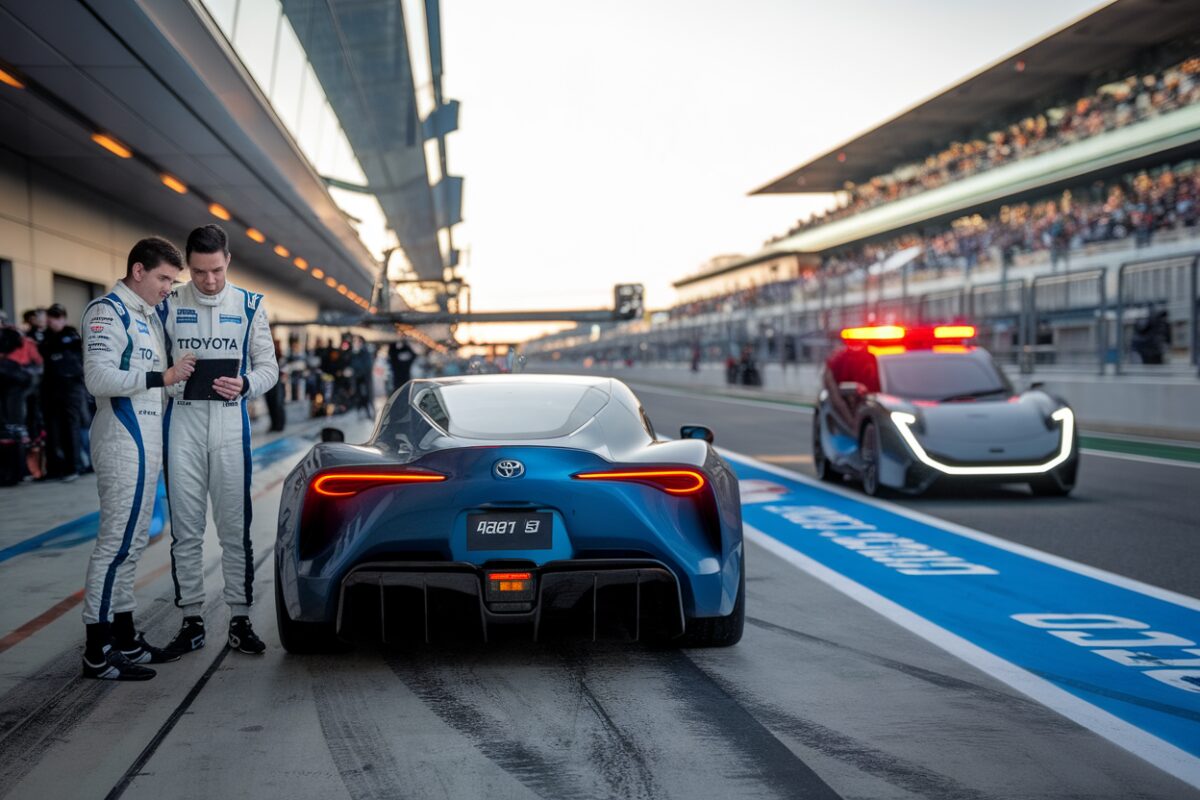
Toyota is back on top at the 24 Hours of Le Mans, and it didn’t get there with a last-lap pass or a miracle move.
The Japanese automaker won the 2026 edition of endurance racing’s biggest prize by out-thinking the field, using aggressive, off-sequence fuel stops and near-flawless execution to beat BMW, Cadillac and Ferrari in a four-brand fight that stayed tight deep into the race. At speeds topping roughly 211 mph on the Mulsanne Straight, the smallest pit-lane mistake, or a badly timed safety-car window, was enough to torch a year’s worth of preparation.
In front of an announced crowd of 400,000, Toyota’s strategy held while rivals got snagged by traffic, neutralizations and penalties. The result snapped the recent Le Mans momentum that had tilted toward Ferrari and underscored a simple truth Americans know from Daytona and Indy: raw speed is great, but clean operations win endurance races.
Toyota’s No. 8 car wins by playing the long game, fast
The winning entry was the No. 8 Toyota GR010 Hybrid (listed in the original report as “TR010”), driven by Sébastien Buemi, Brendon Hartley and Ryo Hirakawa. Toyota’s edge came early, when it dove into the pits sooner than most of the front-runners for shorter fuel fills, an aggressive call that created a strategic offset on a 8.1-mile circuit where timing can be worth far more than an on-track overtake.
As the leaders cycled through pit stops, the top spot bounced between Toyota, BMW and Cadillac. Toyota’s bet was that clean air and controlled traffic management would pay off over hours, not laps. One endurance engineer summed up the mindset in the paddock: you don’t win Le Mans with one magical lap, you win by avoiding three terrible laps stuck in traffic.
Toyota also avoided the self-inflicted wounds that wreck endurance bids: sloppy stops, pit-lane penalties, and rushed decisions when the race goes neutral. Short-fueling more often can increase operational risk, more pit visits means more chances to mess up. Toyota didn’t.
BMW had the pole, and learned Le Mans doesn’t care
BMW arrived looking like a threat. The No. 15 BMW M Hybrid V8 grabbed pole position in qualifying, a headline result for a program still building its modern Le Mans résumé. But the race quickly showed how little pole means once 24 hours of traffic, tire wear and strategy take over.
BMW’s No. 20 stayed in the hunt for the long haul, running on the same lap as Toyota and Cadillac for hours. Around the four-hour mark, the gaps among the main contenders were roughly 30 to 60 seconds, close enough that a Virtual Safety Car could erase much of it in a heartbeat.
The gut punch came when the No. 15 got tangled with a slower car and had to pit for repairs, tumbling down the order. It was classic Le Mans: the leaders don’t just race each other, they race the constant, high-speed chess match of passing GT traffic at vastly different speeds.
Still, BMW leaves with a clear step forward: front-running pace and sustained pressure on Toyota. The missing piece is the hardest one, turning speed into a clean, mistake-free 24-hour execution.
Cadillac looked ready to pounce, then the race turned on a VSC
Cadillac, running with the Hertz Team Jota operation, spent long stretches looking like it had the tools to win. With two cars, Nos. 38 and 12, regularly in the top three, Cadillac had the strategic advantage endurance teams crave: multiple bullets to cover pit windows, split strategies, and force rivals to react.
Then a Virtual Safety Car early in the fourth hour scrambled the deck. Several cars chasing Toyota got caught on the wrong side of the timing, triggering urgent pit stops and then a return trip for full service, a brutal double hit that can turn a seconds-level fight into a longer chase.
Adding tension, the report says the two Cadillac Jota entries and another Cadillac from Wayne Taylor Racing were mentioned as being under investigation related to those emergency-stop sequences. Any sporting decision could have reshaped the order, and teams track those procedural calls obsessively even when they insist they don’t.
Cadillac still showed it can lead at Le Mans, and for an American brand chasing a modern-era breakthrough at the race, that matters. But the weekend also reinforced the fine print: pace alone won’t beat the rulebook, the pit lane, and the randomness of neutralizations.
Ferrari came in as the standard, and raced like it wasn’t
Ferrari arrived carrying the weight of recent Le Mans success in the Hypercar era, but this time it looked mortal. The Italian team piled up mistakes: driving errors, penalties, and tense moments in traffic. One penalty cited in the report, about four seconds, sounds trivial until it drops you behind the wrong GT car at the wrong time and costs far more than the stopwatch says.
The No. 50 Ferrari was also flagged for a mechanical issue, and a spin was noted among the front-running group. At Le Mans, you can survive one scare. Stack two or three, and the race starts forcing you into riskier moves, especially at night, when prototypes close on slower cars at closing speeds that can feel like a jump cut.
A late-race safety-car sequence after a GT went off helped a privateer Ferrari, the yellow No. 83 499P, highlighting endurance racing’s built-in chaos: sometimes the track hands you a gift, sometimes it takes one away.
The bigger takeaway for Ferrari is simple: in a four-manufacturer brawl, “almost perfect” isn’t enough. Toyota and BMW ran like metronomes. Ferrari didn’t.
A four-brand fight decided by pit calls, traffic and nerves
This Le Mans was defined by compression at the front. At one point late in the race, the top four were discussed as being separated by about eight seconds, an eye-popping number over an event that runs 24 hours and covers thousands of miles.
Neutralizations shaped everything: Virtual Safety Cars, Full Course Yellows, and safety-car periods created traps and opportunities depending on pit timing. Toyota repeatedly looked like it was placing stops to minimize exposure, gaining time when passing was impossible and discipline mattered most.
With daytime heat giving way to a cooler night, the race demanded constant adaptation, tires, brakes, concentration, and the mental grind of dawn when fatigue makes traffic more dangerous. Le Mans doesn’t just reward the fastest car. It rewards the team that makes the fewest bad decisions at 200-plus mph.
For the World Endurance Championship, Toyota’s win tightens the story: multiple manufacturers can realistically win on any given weekend if they bring speed, reliability and pit-lane precision. Toyota proved it can still land the knockout punch. BMW looks closer than ever. Cadillac has the firepower. Ferrari learned the hard way that reputation doesn’t protect you from the details.
Key Takeaways
- Toyota wins Le Mans 2026 thanks to an off-sequence fueling strategy and flawless execution
- BMW and Cadillac were in the fight for the win, but traffic, cautions, and pit stops made the difference
- Ferrari was hampered by mistakes, a four-second penalty, and technical issues
Frequently Asked Questions
Which Toyota won the 2026 24 Hours of Le Mans?
The No. 8 Toyota TR010 Hybrid, driven by Sébastien Buemi, Brendon Hartley, and Ryo Hirakawa, won overall.
Why was Toyota’s strategy decisive?
Toyota opted for very early stops for short fuel fills, creating a strategy offset. By taking advantage of fuel cycles and neutralizations, the team was able to move back into the lead while limiting losses in traffic.
Did BMW have the fastest car?
BMW showed strong pace, including pole position for the No. 15 BMW M Hybrid V8. But contact with a lapped car and other race setbacks hurt the final result, despite being in the fight for a long time.
What made Cadillac’s race more difficult?
Cadillac had two well-placed Jota cars, but the timing of a virtual safety car forced emergency stops and returns to the pits for full service. Investigations related to those procedures also added sporting uncertainty.
Why didn’t Ferrari fight for the win to the end?
Ferrari piled up incidents, including a four-second penalty, mistakes in traffic, and a mechanical issue mentioned on the No. 50 car. In such a tight race, those lost seconds were enough to take the Italian brand out of the main fight.
Sources
- Les 24 Heures du Mans en 2'40' : BMW, Toyota et Cadillac en bagarre devant, Ferrari à la traîne – RTBF Actus
- Le Mans 24h, H4: Toyota extends advantage over BMW in …
- 24 heures du Mans: une Cadillac en tête, une autre abandonne
- 8-hour round-up: Ferrari into the lead, with Porsche and Toyota on a charge at Le Mans
- Double top for Cadillac as #7 Toyota out of Hyperpole qualifying
- Top 2026 : voici les meilleures agences digitales en France pour réussir votre projet numérique dès cette année - juin 15, 2026
- Vainqueur 24 Heures du Mans 2026 , 4 marques au podium, Toyota bat BMW, Cadillac et Ferrari, ce final inattendu surprend les fans - juin 14, 2026
- Les beaux jours arrivent : préparer son véhicule vintage pour se balader sur les routes - juin 9, 2026
