


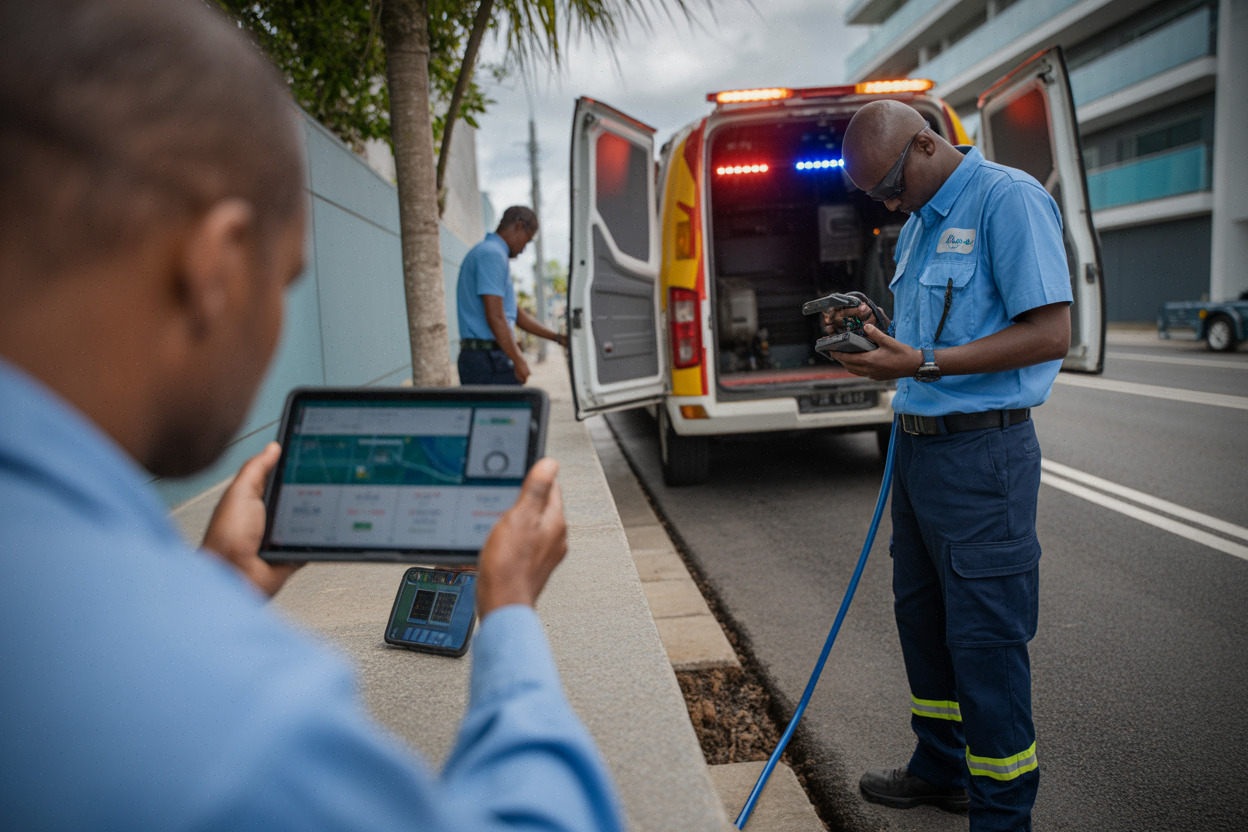
Guadeloupe’s water system has become a daily stress test for residents: low pressure, surprise shutoffs, and a public service that too often feels like it’s running on emergency mode. Now the island’s water authority says it’s rebuilding a dedicated leak-hunting team, backed by artificial intelligence, to pinpoint where water is disappearing and dispatch crews faster.
The agency, known by its French acronym SMGEAG, is trying to move beyond a patchwork approach that relies on scattered complaints and last-minute rounds. The goal is simple: stop losing treated water into the ground, reduce outages, and prove to customers that repairs are being targeted, and tracked.
A leak-fighting unit, rebuilt from the ground up
SMGEAG’s plan starts with a basic operational reality: you can’t manage a fragile water network by chasing the loudest problem of the day. The utility wants a structured “anti-leak” unit tasked with monitoring anomalies, setting priorities, and documenting repairs so fixes don’t vanish into paperwork, or get repeated on the same stretches of pipe.
For Guadeloupe residents, the stakes are immediate. Chronic leaks can mean entire neighborhoods losing pressure, scheduled shutoffs stretching longer than promised, and disruptions that hit schools, businesses, and health facilities hardest.
The utility is also signaling an internal shift: leak detection isn’t just about showing up when a pipe bursts. It requires comparing consumption patterns, tracking gaps between water produced and water billed, and turning field reports into actionable work orders. The AI tool is meant to support that workflow, not replace the people doing the work.
How AI is supposed to triage repairs
In practice, the AI system would sift through multiple streams of information, water volumes entering the network, unusual consumption, pressure drops, past break histories, pipe age, and resident reports, to flag areas where a hidden leak is most likely.
That matters because the hardest leaks aren’t the dramatic ones that flood a street. Some seep underground for hours or days without obvious surface damage, tying up crews as they narrow down the source. If software can shrink the search area, technicians can move faster with traditional tools like acoustic listening, valve inspections, pressure checks, and overnight flow monitoring.
But predictive systems are only as good as the data they ingest. Faulty meters, delayed reporting, or sloppy recordkeeping can turn “smart” alerts into noise. SMGEAG’s digital push will require disciplined data entry, maintained equipment, and regular training for staff using the platform.
The utility is careful not to sell AI as a magic fix. The promise is more modest, and more realistic: use limited crews and budgets where they’ll save the most water and prevent the most disruption, while making the decision-making clearer to local officials and the public.
An island network that’s old, spread out, and hard to manage
Guadeloupe, a French Caribbean archipelago east of Puerto Rico, faces challenges familiar to many aging U.S. water systems, but amplified by geography. Water infrastructure is spread across rugged terrain and uneven development, with long distances between production sites and where people actually live.
Older pipes break more often, and weather swings, from drought to intense rainfall, complicate day-to-day operations. That makes losses harder to detect than in newer, more uniform systems.
When a major leak hits, customers feel it immediately: longer shutoffs, weaker pressure, and slower recovery after repairs. Families end up storing water and rearranging routines. Businesses, especially restaurants, hotels, food processing, and other water-dependent services, can lose revenue when supply becomes unreliable.
There’s also a financial squeeze. Every gallon lost is water that was captured, treated, and pumped with no corresponding revenue. Cutting leaks isn’t just about service quality; it’s a budget lever that can free up capacity and help target the most urgent capital work.
Why people, not software, will decide whether this works
SMGEAG’s success will hinge on the technicians in the field. AI can’t replace local knowledge of neighborhoods, hard-to-access valves, or the on-the-ground experience of tracking a leak by sound and pressure behavior.
Training will be critical. Crews will need to understand what the system is flagging, confirm whether alerts are real, and feed results back into the platform, false alarms, verified leaks, and durable repairs, so the tool improves over time instead of breeding distrust.
Communication with residents may be just as important as the technology. People tolerate shutoffs more readily when they’re told clearly why it’s happening, how long it will last, and what improvement to expect afterward. On an island where confidence in water service has been battered for years, trust will be rebuilt through repeated, visible results.
If SMGEAG can staff the unit, keep data clean, and fund repairs consistently, the AI-assisted approach could help focus first on the areas losing the most water, where a fast fix would translate directly into fewer outages and more reliable taps.


Key Takeaways
- SMGEAG wants to rebuild a team dedicated to water leaks.
- An AI tool should help prioritize field interventions.
- Data reliability will determine how effective the system is.
- Field staff remain essential to confirm diagnoses.
- Reducing water losses can improve service for customers.
Frequently Asked Questions
Why does SMGEAG want to use artificial intelligence?
SMGEAG is looking to better identify areas where water losses are likely. Artificial intelligence can combine pressure, consumption, and incident history data to help direct teams to the highest-priority areas.
Will AI replace field technicians?
No. The tool is meant to support decision-making. Technicians are still needed to confirm alerts, pinpoint leaks, carry out repairs, and verify that the system has returned to normal operation.
What benefits can customers expect?
If the system is fed with reliable data and teams are available, customers can expect faster leak detection, more targeted repairs, and a gradual improvement in service continuity.

- Chauffeur privé de prestige : la mise à disposition pour dirigeants et VIP à Bordeaux - septembre 7, 2026
- L’application Leocare est-elle la plus téléchargée dans l’assurance en France ? - août 25, 2026
- En Vendée, le réflexe vélo et trottinettes : les panneaux de signalisation à connaître - août 25, 2026
